Hiring a roofing contractor is one of those decisions where the stakes are genuinely high. A good contractor protects your home for decades. A bad one leaves you with leaks, voided warranties, and a mess that costs more to fix than the original job. The tricky part is that bad contractors don't advertise themselves as bad contractors. They show up with trucks, business cards, and low bids just like everyone else.
This guide is written from the perspective of someone in the roofing business in northeast Indiana. We know how this industry works from the inside - the shortcuts some crews take, the pricing games that hurt homeowners, and the specific questions that separate a professional outfit from a crew working out of a pickup truck. Use this to protect yourself before you sign anything.
Red Flags That Should End the Conversation
Some warning signs are obvious. Others are subtle. If you encounter any of these during your search for a roofing contractor, walk away. Don't negotiate. Don't give them a chance to explain it away. Just move on.
Door-Knocking After Storms
After every major storm in Noble, DeKalb, or Whitley County, trucks roll in from out of state with crews that knock on doors offering free inspections. These are storm chasers. They collect insurance money, install the cheapest materials as fast as possible, and disappear. When the roof fails in three years, there's no one to call. No local office. No warranty service. No accountability.
A legitimate local contractor doesn't need to knock on doors. They have a reputation, a phone that rings, and a backlog of scheduled work. If someone shows up unsolicited at your door after a storm, that's your first and biggest red flag.
Storm Chaser Warning Signs
Out-of-state license plates on work trucks, no physical local office, pressure to sign an insurance assignment immediately, and an unwillingness to provide local references. Legitimate contractors don't need to chase storms door to door - their reputation brings the work to them.
Demanding Large Deposits
Any contractor asking for more than a small material deposit before work begins is either undercapitalized or running a scam. Established roofing companies have credit lines with their suppliers. They don't need your cash to buy shingles. A request for 50% upfront - or worse, full payment before work starts - is a serious red flag.
Reasonable payment structures look like this: a small deposit (10–15%) to schedule the job, with the balance due upon satisfactory completion. Some contractors don't require any deposit at all. Either approach is fine. Handing over thousands before a single shingle is stripped is not.
Verbal-Only Agreements
If a contractor won't put the scope of work, materials, timeline, and price in writing, stop right there. A handshake agreement might feel personal and trustworthy. It's not. It's a contractor who doesn't want documentation of what they promised. Written contracts protect both parties. Any contractor who resists putting things on paper is someone you can't hold accountable.
Prices That Seem Too Low
Roofing materials cost what they cost. Labor has a floor. If one bid comes in 30% below everyone else, that contractor is cutting corners somewhere - thinner underlayment, fewer nails, skipping ice-and-water shield, using seconds-grade shingles, or paying their crew below market rate (which means inexperienced installers doing the work). You don't get a premium roof at a bargain price. That math doesn't work in any industry.
Quick Answer: How Do I Spot a Bad Roofing Contractor?
The biggest red flags are door-knocking after storms (storm chasers), demanding large upfront deposits, refusing to provide written contracts, offering prices far below competitors, and being unable to provide local references or a physical business address. Legitimate contractors have established local reputations, proper insurance, and transparent pricing.
Questions to Ask Every Contractor
Good contractors won't be annoyed by questions. They expect them. If a contractor gets defensive or evasive when you ask straightforward questions about their business, that tells you everything you need to know. Here's what to ask:
1. How Long Have You Been Operating in This Area?
Longevity isn't everything, but it matters. A company that's been working in northeast Indiana for 5, 10, or 15 years has a track record you can verify. They've weathered slow seasons, built supplier relationships, and established a reputation they can't afford to damage. A crew that set up shop six months ago and might relocate next year has none of that.
2. Can I See Proof of Insurance?
This is non-negotiable. Every roofing contractor should carry general liability insurance and workers' compensation insurance. General liability protects your property if the crew damages something. Workers' comp protects you from liability if a worker gets hurt on your roof. Don't just ask if they have it - ask to see the certificates. Call the insurance company to verify the policy is current. An uninsured crew on your property is a lawsuit waiting to happen.
3. What Specific Materials Will You Use?
A vague answer like "we use good shingles" isn't acceptable. You should know the manufacturer, the product line, the underlayment type, and whether ice-and-water shield will be installed at eaves and valleys. A good contractor will specify every component in writing - shingles, ridge caps, starter strips, underlayment, flashing, and ventilation. If they can't tell you what they're putting on your roof, how can you trust that it's the right material?
4. Do You Pull Permits?
Building permits for roof replacements are required in most Indiana municipalities. Some contractors skip permits to save time and money. That's a problem for you. Without a permit, there's no inspection, which means no independent verification that the roof was installed to code. It can also create complications when you sell your home - buyers' inspectors and title companies will flag unpermitted work.
5. What's Your Workmanship Warranty?
Shingle manufacturers warranty their product. But who warranties the installation? If a leak develops because of a flashing mistake or improper nail placement, the manufacturer won't cover that - it's a workmanship issue. Good contractors stand behind their labor with a written workmanship warranty, typically ranging from 5 to 15 years. Ask what it covers, what it doesn't, and whether the company will realistically be around to honor it.
6. Can You Provide Local References?
Not references from three states away. Local references. Homeowners in Kendallville, Auburn, Columbia City, Ligonier, or wherever you live. Ideally, references from jobs completed two or three years ago - not just last month. You want to know how the roof has held up, not just how the crew behaved during installation. A contractor who can't produce local references from recent years either hasn't done enough work in the area or doesn't have satisfied customers. Neither is encouraging.
Quick Answer: What Questions Should I Ask a Roofing Contractor?
Ask about their local operating history, request proof of insurance (general liability and workers' compensation), get specific material details in writing, confirm they pull building permits, ask about their workmanship warranty length and coverage, and request local references from projects completed 2–3 years ago.
What Good Contractors Do Differently
It's easy to list red flags. Harder to describe what a quality operation looks like from the inside. But that's where the real differentiation happens - in the practices that homeowners rarely see but always benefit from.
Thorough Pre-Job Inspections
A good contractor doesn't just measure your roof and hand you a quote. They inspect the deck for soft spots, check the attic for ventilation issues and moisture damage, examine the flashing around chimneys and plumbing vents, and assess the condition of fascia and soffits. This takes time. It also prevents surprises on installation day, when discovering rotten decking at 7 AM can blow up a schedule and a budget.
Written Scope of Work - Every Detail
Professional proposals read like a construction document, not a napkin estimate. They specify shingle type and color, underlayment brand, the number of ice-and-water shield courses, flashing material, ventilation changes, dump fees, and the timeline. They also specify what's not included - so there are no arguments later about whether repainting the fascia was part of the deal.
Clean Job Sites
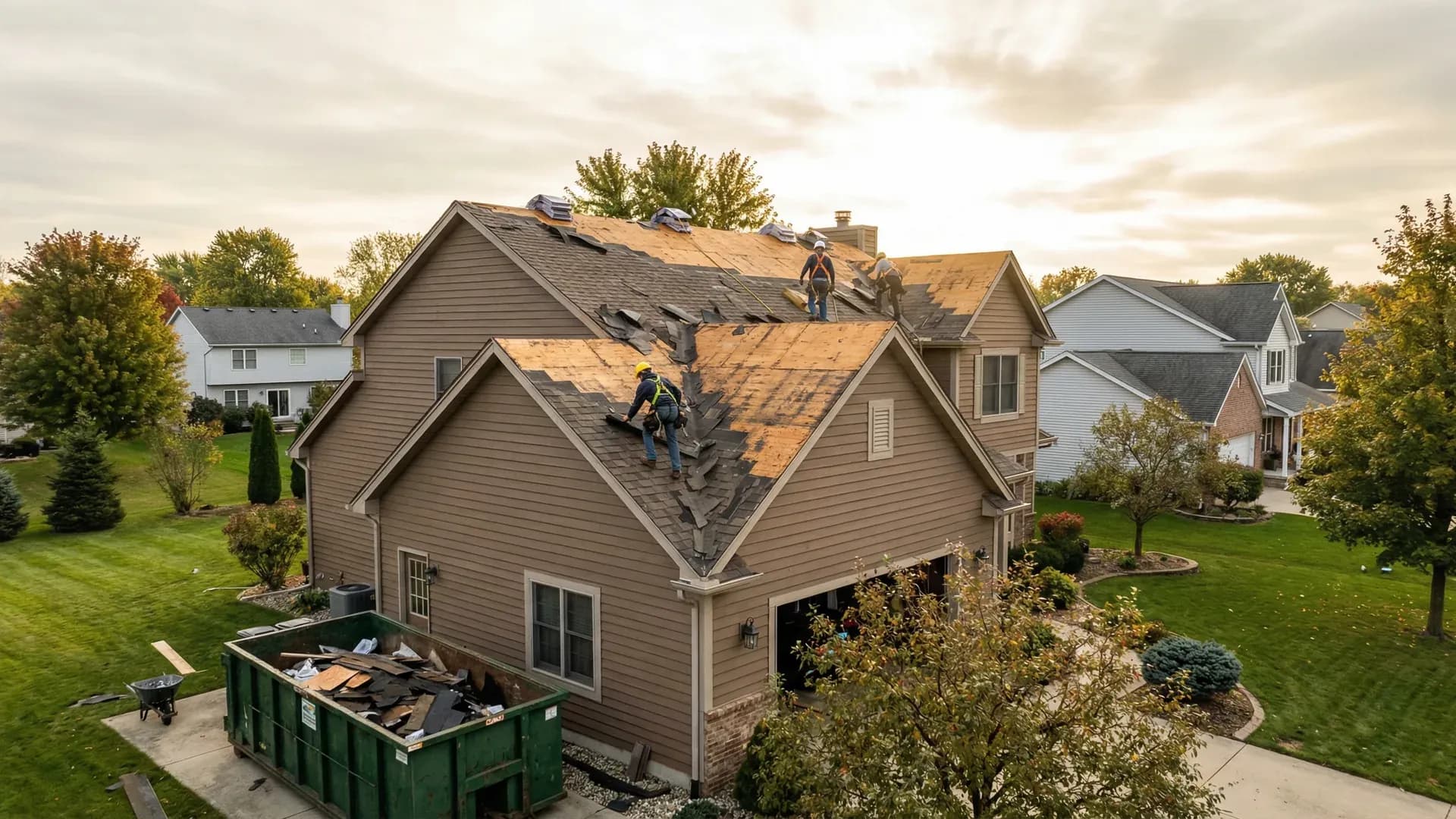
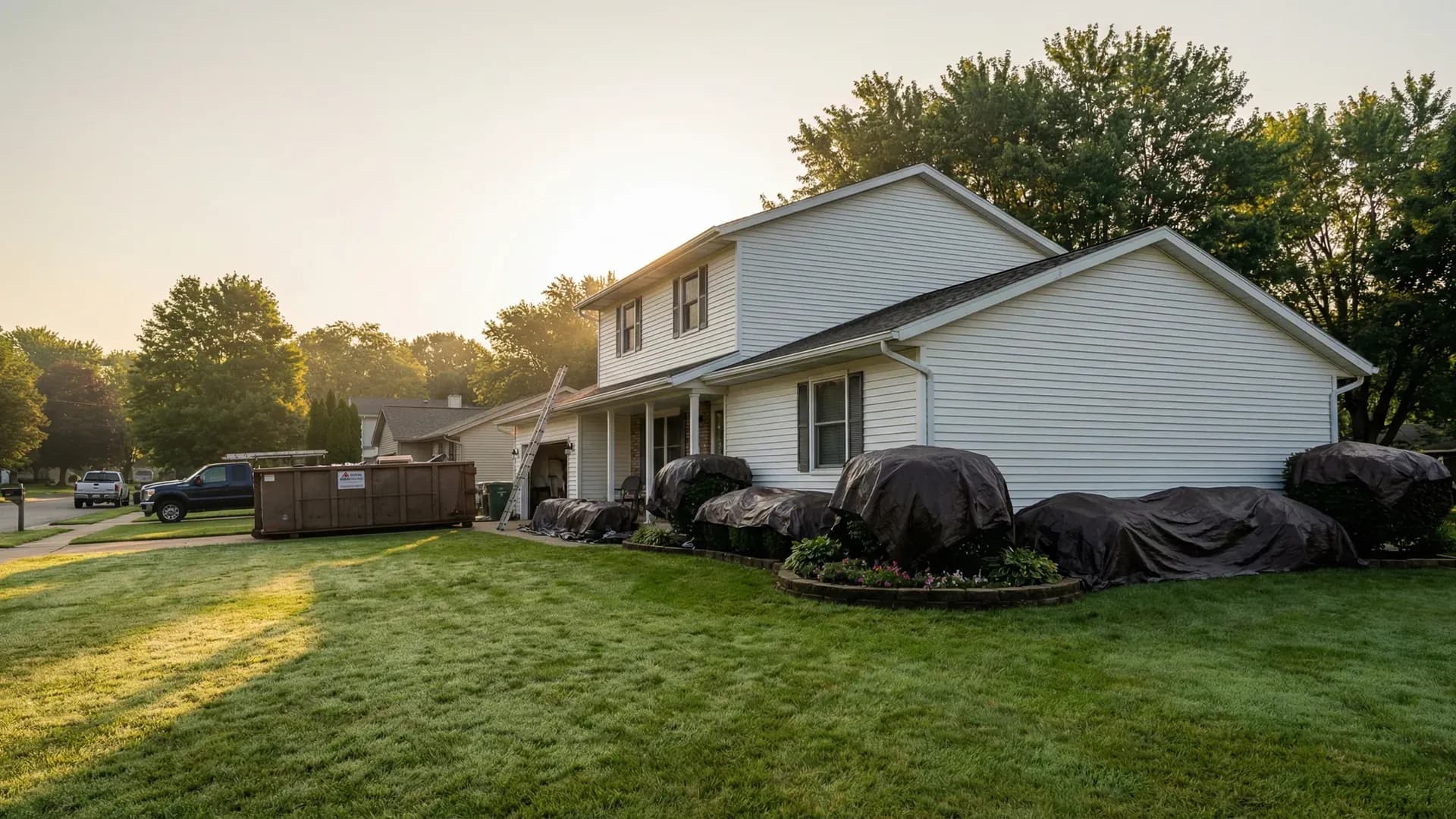
This sounds minor. It's not. A crew that leaves a yard full of nails, broken shingles, and wrapper plastic is a crew that cuts corners on things you can't see, too. Good contractors run magnetic nail sweepers across the yard and driveway multiple times after every job. They tarp landscaping before tear-off begins. They haul debris daily - they don't let dumpsters overflow into your driveway for a week.
Manufacturer Certifications
Major shingle manufacturers like Owens Corning, GAF, and CertainTeed offer contractor certification programs. These programs require specific training, verified installation track records, and ongoing quality standards. A certified contractor can offer enhanced warranties from the manufacturer that uncertified installers can't match. This isn't a marketing badge - it's a direct line to better warranty coverage for you.
They Talk You Out of Things
The Bid Comparison Process
Get three bids. This is standard advice because it works. But comparing roofing bids isn't as simple as picking the lowest number. You need to compare the bids line by line to ensure you're evaluating equivalent proposals.
- Verify that all bids specify the same shingle product (manufacturer and product line, not just "architectural shingles")
- Check whether each bid includes ice-and-water shield - and how many courses. Some bids skip it entirely to lower the price.
- Confirm the underlayment type. Synthetic underlayment costs more than felt but performs significantly better in our climate.
- Look for ventilation assessment and any recommended improvements. A bid that ignores ventilation is incomplete.
- Compare workmanship warranty terms. A 2-year labor warranty is not equivalent to a 10-year labor warranty, even if the material price is the same.
- Ask about dump fees, permit fees, and whether they're included or billed separately.
- Check the payment terms. Aggressive deposit requirements relative to competitors are a concern.
Pro Tip
When comparing bids, create a simple spreadsheet with each component as a row and each contractor as a column. This makes apples-to-apples comparison straightforward and reveals what the low bidder might be leaving out.
Insurance Claims and Contractor Selection
If you're replacing your roof after storm damage, you'll be working with an insurance adjuster. Some homeowners let the insurance company dictate the contractor. Others pick the cheapest option that falls within the insurance payout. Both approaches can backfire.
A good contractor will work with your insurance company but advocate for you. That means meeting the adjuster on-site, documenting damage thoroughly, and pushing back when the adjuster's scope doesn't cover necessary work. It also means being transparent about what your policy covers and what might come out of pocket - before work begins, not after.
Be cautious of any contractor who offers to "cover your deductible" or inflate the claim to give you extras. This is insurance fraud. It's illegal in Indiana, and if the insurance company catches it, you're the policyholder on the hook - not the contractor.
Financing and Payment Considerations
- Same-as-cash promotions (12 or 18 months) can save you interest if you pay within the promotional period, but deferred interest charges can be steep if you miss the deadline
- Home equity loans or lines of credit typically offer the lowest interest rates for roofing projects
- Credit union financing often provides better terms than contractor-affiliated lenders - 3 Rivers Federal Credit Union, for example, serves northeast Indiana and offers home improvement loans
- Avoid any financing arrangement that wraps unusually high origination fees or contractor commissions into the loan balance
Online Reviews: Useful but Not the Whole Story
Google reviews matter. So do reviews on the Better Business Bureau and Angi. But they're just one data point. Five-star averages can be inflated by solicited reviews from satisfied customers while dissatisfied ones don't bother posting. Low star counts might mean the company is new, not bad.
What's more telling than the rating is how the company responds to negative reviews. A contractor who responds professionally, acknowledges the issue, and explains what happened demonstrates accountability. A contractor who gets defensive or attacks the reviewer is showing you exactly how they'll handle a problem on your project. Read the responses, not just the stars.
The Seasonal Factor in Northeast Indiana
Timing affects both pricing and quality in our region. The peak roofing season runs from May through October. During these months, reputable contractors book out 3 to 6 weeks in advance. If a contractor can start tomorrow during peak season, ask yourself why they don't have work lined up.
Spring and late fall can offer scheduling advantages - shorter wait times and occasionally better pricing as crews fill gaps between major projects. Winter installations are possible but not ideal. Shingle sealant strips need warm temperatures to activate, and ice on the deck creates safety and adhesion issues. A good contractor will tell you honestly whether a winter install makes sense for your situation rather than booking jobs year-round regardless of conditions.
Quick Answer: When Is the Best Time to Replace a Roof in Indiana?
The ideal window for roof replacement in northeast Indiana is late spring through early fall (May–October), when temperatures support proper shingle sealant activation and conditions are safest for crews. Book 3–6 weeks ahead during peak season. Spring and late fall can offer better scheduling and occasional price flexibility.
Making Your Decision
Choosing a roofing contractor comes down to trust. Not the kind of trust built by a slick sales pitch or a glossy brochure. Real trust, built on verifiable history, transparent pricing, honest communication, and a genuine commitment to doing the job right.
Take your time. Get multiple bids. Ask hard questions and pay attention to how they're answered. Check references - actually call them and ask if they'd hire the contractor again. Visit a current job site if possible. The 30 minutes you spend vetting a contractor will save you from the hundreds of hours and thousands of dollars a bad hire can cost.
Your roof is the single most important protective system on your home. The contractor you choose to install or replace it should be someone who treats that responsibility with the seriousness it deserves. Do your homework, trust your instincts, and don't let price alone drive the decision. The cheapest roof is almost never the cheapest roof in the long run.