Key Takeaways
- Move vehicles away from the house and clear 15 feet around the perimeter before installation day
- Remove or secure fragile items in your attic — vibrations from roofing work can knock things loose
- Trim overhanging tree branches to give crews safe access and prevent damage
- Plan for noise and disruption — most jobs are complete in 1-3 days
Getting a new roof is one of the biggest home improvement projects you'll ever take on. It's also one you probably haven't done before - most homeowners go through it once, maybe twice in their lifetime. That lack of experience creates a lot of unnecessary anxiety. Will the crew damage my landscaping? How loud will it be? What happens if it rains halfway through? These are all fair questions, and they all have straightforward answers.
At Skyline Roofing Systems, we've handled hundreds of roof installations across Noble, DeKalb, Whitley, and surrounding counties in northeast Indiana. This guide walks you through what actually happens before, during, and after installation day so you can prepare your home and your family with confidence.
Before Installation Day: Preparing Your Property
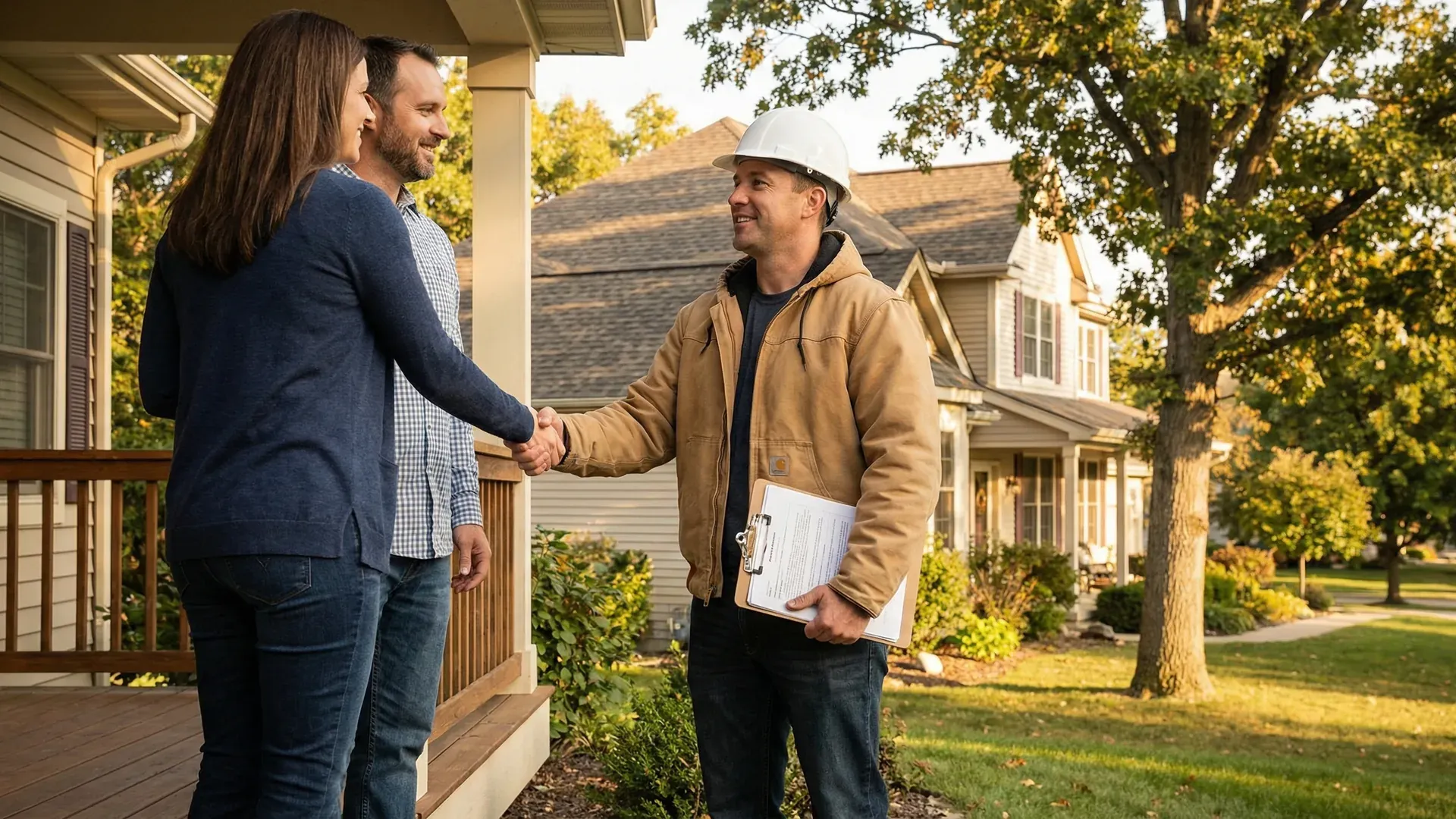
A roof installation typically begins well before the crew arrives. Once you've signed your contract and materials have been ordered, your project coordinator will confirm the start date - usually giving you at least a few days' notice. Here's what to do with that lead time.
Move Your Vehicles
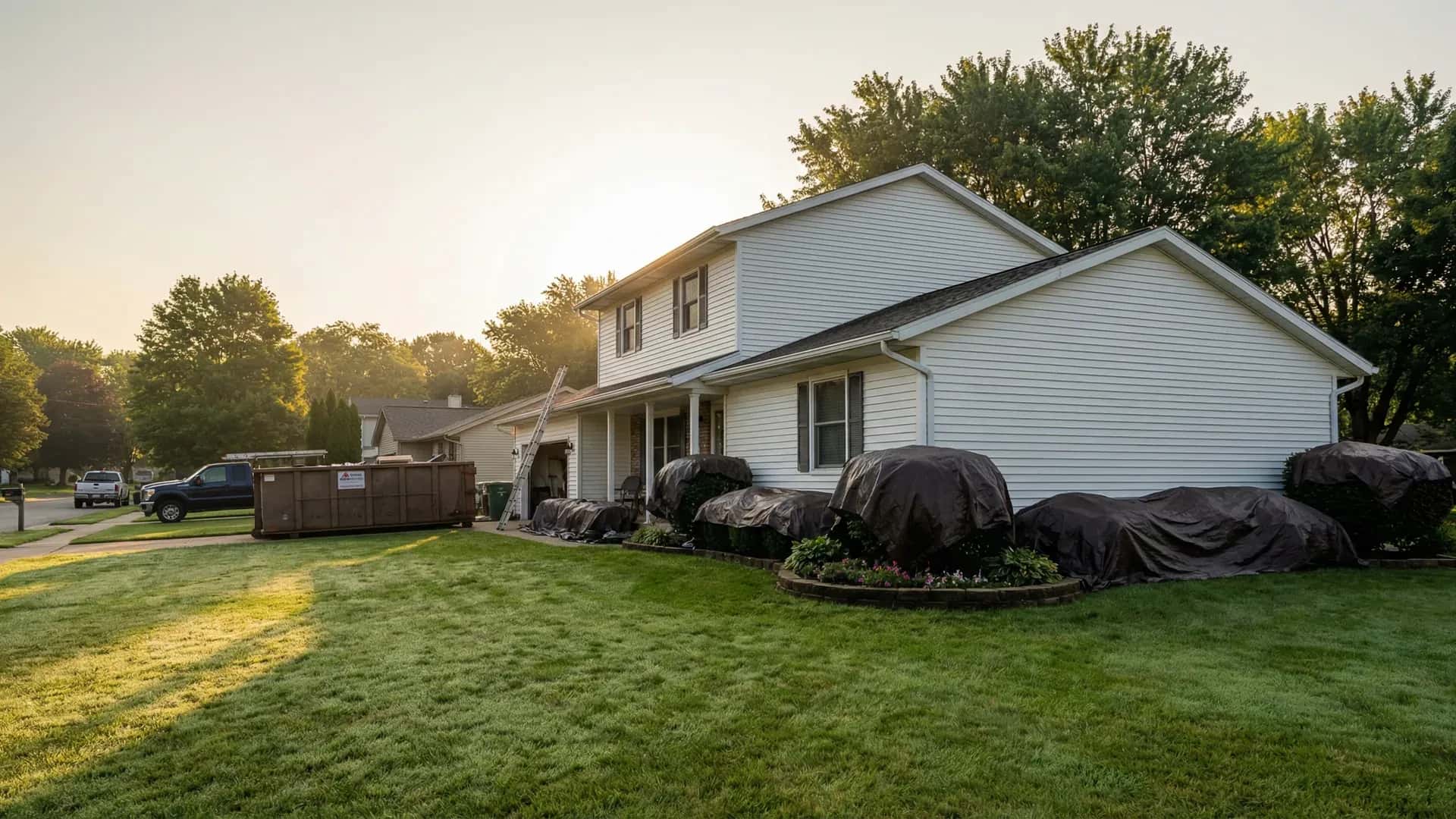
This one's simple but easy to forget. Park your cars down the street or in a neighbor's driveway. The crew will need clear access around your home, and a dumpster will take up a good chunk of your driveway. Beyond access, roofing generates airborne debris - small nail fragments and shingle granules that you don't want landing on your paint job. Move anything with wheels out of the immediate work zone.
Protect Your Landscaping and Outdoor Items
Professional crews use tarps around the perimeter to catch falling debris, but it's still smart to take precautions. Pull patio furniture away from the house. Move potted plants, grills, and anything breakable. If you've got flower beds directly against the foundation, drape a lightweight tarp over them yourself for extra protection.
- Move patio furniture, grills, and potted plants at least 15 feet from the house
- Cover delicate landscaping or garden beds with tarps
- Take down any hanging decorations, string lights, or wind chimes
- Relocate birdbaths, lawn ornaments, and decorative items from the work zone
- Clear a path from the driveway to all sides of the house for crew access
Prepare the Inside of Your Home
Roof work creates vibrations. They're not going to shake your house apart, but pictures on the wall might shift, and items on shelves near exterior walls can rattle loose. Take down anything fragile from upper-floor walls. If you have a finished attic, cover stored belongings with a sheet - fine dust can work its way through in older homes with less-than-perfect vapor barriers.
Pet Owners Take Note
Roof installation is loud, and the sounds are unpredictable. Dogs and cats often get stressed by the hammering, foot traffic, and unfamiliar voices overhead. Consider boarding pets for the day, or set them up in the quietest room with some background music and their favorite toys.
Talk to Your Neighbors
A quick heads-up goes a long way. Let your immediate neighbors know that a crew will be working on your roof and roughly how long it'll take. They'll appreciate the warning about noise and truck traffic - and you'll appreciate their patience.
During Installation: What to Expect on the Job
Installation day usually starts early. Crews in northeast Indiana typically arrive between 7:00 and 7:30 AM to maximize daylight, especially during shorter fall and spring days. Here's what the day looks like from start to finish.
Material Delivery and Setup
Materials often arrive the day before or early the same morning. Shingle bundles get loaded directly onto the roof by a boom truck - you'll hear it, and it's quick. The crew stages their equipment, sets up ground tarps, and positions the dumpster. This setup phase takes about 30 to 45 minutes.
Tear-Off: Removing the Old Roof
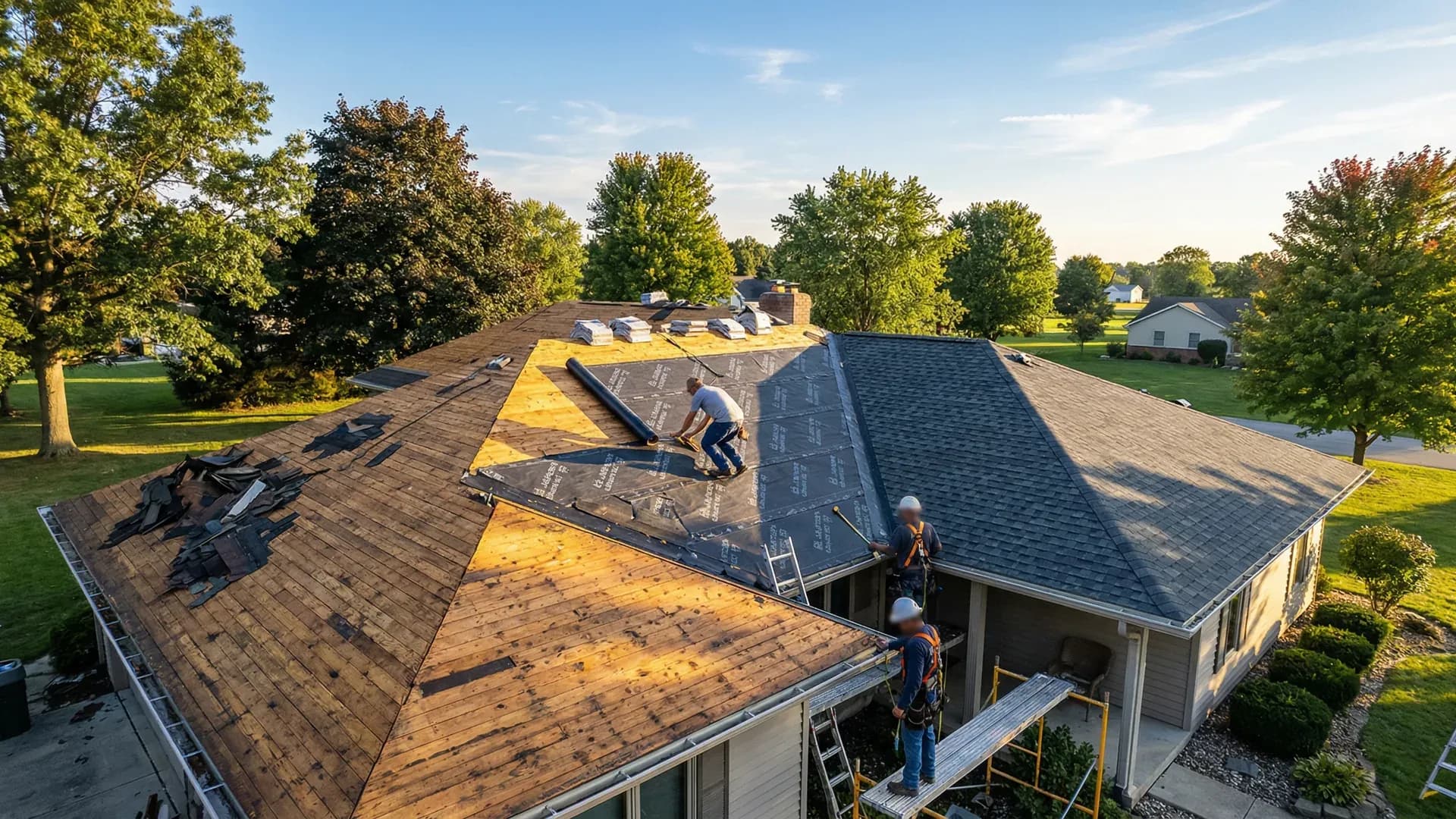
This is the loudest part. Crews strip the old shingles, underlayment, and damaged decking down to the plywood. For a typical 2,000-square-foot home, tear-off takes about 2 to 4 hours depending on how many layers of old roofing are coming off. Old materials go directly into the dumpster. If you're home during this phase, expect significant noise - think industrial-level hammering and scraping directly overhead.
Deck Inspection and Repairs
Once the old materials are off, the crew inspects every inch of decking. Soft spots, water damage, and rotted plywood get replaced before anything new goes on. This is a critical step - a new roof over bad decking won't last. If your home has older decking, budget for the possibility of replacement boards. Most homes need at least a few sheets swapped out. Your contractor should discuss pricing for decking repair before the project starts so there are no surprises.
Installation of New Roofing System
With clean, solid decking confirmed, the new roofing system goes on in layers. First comes the ice and water shield along the eaves, valleys, and around penetrations like vents, skylights, and chimneys. Then synthetic underlayment covers the entire roof surface. Starter strips go along the eaves and rakes, followed by the shingles or panels themselves, working from the bottom up. Ridge caps and ventilation components finish it off.
How Long Does a Roof Installation Take?
Most residential roof replacements in northeast Indiana take 1 to 3 days for shingle roofs and 2 to 5 days for metal roofs. A straightforward single-story ranch with a simple roofline can often be completed in one day. Larger or more complex homes may take longer. Weather delays can add time, but experienced crews plan around Indiana's forecast patterns.
Noise, Vibration, and Daily Activity
There's no sugarcoating it - roof installation is loud. Nail guns fire repeatedly, materials get dragged across surfaces, and boots thump across the deck all day. If you work from home, plan to relocate to a coffee shop or library for the day. Phone calls and video meetings aren't happening with a crew overhead. The crew typically works from about 7 AM to 5 or 6 PM, with lunch and short breaks throughout the day.
What If It Rains?
Experienced roofers watch the weather forecast closely. If rain is expected, the crew will either adjust their start date or make sure they reach a point where the underlayment is fully installed before stopping. Synthetic underlayment is waterproof and will protect your home temporarily. Your roof won't be left exposed to the elements overnight. If a surprise storm hits mid-project, the crew has tarps and knows how to secure the job site quickly.
After Installation: Cleanup, Inspection, and Warranty
Site Cleanup
A good roofing company doesn't just install your roof and leave. Cleanup is part of the job. Crews should collect all debris, pull up ground tarps, and run a magnetic roller across your yard and driveway to pick up stray nails. At Skyline, we do a final walkthrough with the homeowner to make sure the property looks right. You shouldn't find shingle wrappers in your bushes or nails in your lawn two weeks later.
Final Inspection and Walkthrough
Before the crew packs up, your project lead will walk you through the completed roof from ground level. They'll point out key features: ridge vent placement, flashing details around chimneys and walls, and drip edge installation. If you have questions about anything - ask them now. This is your roof for the next 25 to 50 years, and you should feel completely confident in the work.
Warranty Documentation
You should receive two types of warranty paperwork. The manufacturer's warranty covers the materials - typically 25 to 50 years for shingles, 40+ years for metal panels. The contractor's workmanship warranty covers the installation itself. Keep both documents in a safe place. They're your proof of coverage if anything goes wrong down the road.
- Manufacturer's material warranty (25–50 years for shingles, 40+ for metal)
- Contractor's workmanship warranty (varies by company)
- Final inspection report or completion certificate
- Before and after photos of the project
- Any permits or municipal inspection records
Keep Your Warranty Valid
Most roofing warranties require regular maintenance to stay valid. Schedule an annual roof inspection and keep your gutters clean. If you notice something off - a lifted shingle, a small leak - address it immediately. Ignoring minor issues can void your warranty coverage on related damage.
Homeowner's Pre-Installation Checklist
Print this list and work through it in the days before your installation. It covers everything we've discussed in an easy-to-reference format.
- Confirm start date and estimated timeline with your contractor
- Move all vehicles out of the driveway and away from the house
- Relocate patio furniture, grills, and outdoor decorations
- Cover flower beds and delicate landscaping with tarps
- Remove fragile items from upper-floor walls and shelves
- Arrange pet care or set up a quiet, safe space for animals
- Alert your immediate neighbors about the work schedule
- Clear attic access if an interior inspection is planned
- Identify where you'll spend the day if noise is a concern
- Confirm how decking repairs will be priced if needed
Common Questions About Roof Installation Day
Do I need to be home during installation?
You don't have to be home the entire time, but it helps to be available at the start and finish. The crew lead may need access to your electrical panel, water spigot, or have questions about specific areas of the roof. Being reachable by phone is usually enough if you can't take the whole day off.
Will the crew need to come inside my house?
Rarely. The only reason a crew might need interior access is to check attic ventilation or inspect for leaks from the inside. Your contractor will let you know ahead of time if interior access is needed.
Can I still use my electricity and water during the project?
Yes. Your utilities won't be affected. The crew may ask to plug in a compressor or use your hose for cleanup, but your household systems stay fully operational.
Choosing the Right Contractor Makes the Difference
The single biggest factor in a smooth roof installation isn't the materials or the weather - it's the crew doing the work. A well-organized, communicative contractor handles every phase from pre-job planning to final cleanup with professionalism. They'll keep you informed, respect your property, and deliver a roof that performs for decades.