Most roofs don't fail overnight. They give you warnings - sometimes for months or even years - before a small problem becomes water dripping into your living room. The trick is knowing what to look for. We've inspected hundreds of roofs across Noble, DeKalb, Whitley, and the surrounding counties, and certain patterns show up again and again on roofs that are at or past their limit.
Here are seven warning signs that your roof may need replacing. Some you can spot from the ground. Others require getting up on a ladder or into your attic. All of them deserve attention before northeast Indiana's next big storm.
Quick Answer
The most common signs you need a new roof include shingles that are curling, cracking, or missing; granules accumulating in your gutters; daylight visible through the roof deck; and a roof that's over 20 years old. If you notice two or more of these signs, schedule a professional inspection before further damage occurs.
1. Your Roof Is Over 20 Years Old
A 20-year-old shingle roof that shows no other warning signs might have several good years left. But one that's 20 and showing even one of the other signs on this list? It's time to start planning. The older the roof, the more vulnerable it is to the next major weather event.
What to Do
If your roof is approaching or past its expected lifespan, schedule a professional inspection. It costs nothing - Skyline Roofing provides free roof assessments across all seven counties we serve. Knowing the condition of your roof now lets you plan financially instead of scrambling after a failure. Call <a href="tel:+12602058448">(260) 205-8448</a>.
2. Shingles Are Curling, Buckling, or Cracking
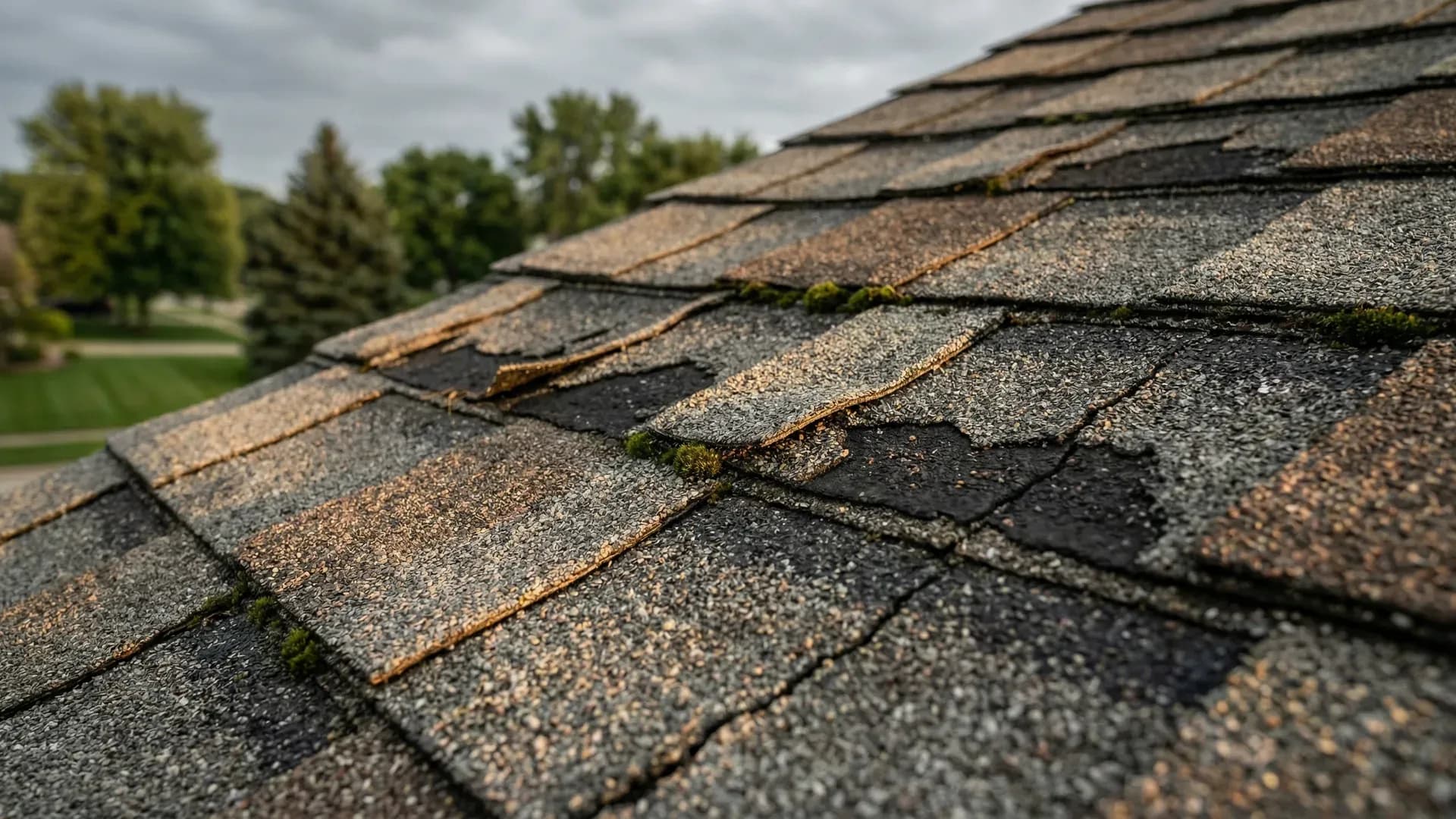
Walk out to your yard and look up at your roof. Healthy shingles lie flat against the deck in uniform rows. When they start failing, you'll see three distinctive patterns.
- Curling: Edges turn upward or the center humps up (called "cupping"). Usually caused by moisture trapped beneath the shingle or loss of the asphalt's volatiles over time.
- Buckling: Shingles warp and create visible ridges or waves across the roof surface. Often related to poor ventilation overheating the attic space.
- Cracking: Visible splits in the shingle surface, typically from years of thermal cycling - expanding in summer heat and contracting in winter cold. Northeast Indiana's 100-degree temperature swings between seasons accelerate this.
A few curled shingles in one area might be repairable. But widespread curling, buckling, or cracking across multiple roof planes means the shingles have reached the end of their service life. Patching at that point is putting band-aids on a systemic failure.
What to Do
If distortion is limited to a small area (under 10% of the roof), targeted repair may buy you time. If it's widespread, replacement is the right call. Either way, a professional evaluation gives you a clear picture of what you're working with.
3. Granules in Your Gutters
Those tiny mineral granules embedded in asphalt shingles aren't decorative. They're the shingle's UV protection and fire resistance. When they start shedding excessively, the underlying asphalt is exposed to direct sunlight and degrades much faster.
Some granule loss is normal during the first year after installation - that's just manufacturing residue washing off. But if your gutters are accumulating gritty, sand-like material five or ten years in, or if you notice bald spots on the shingles where the dark asphalt substrate shows through, the shingles are deteriorating. Heavy granule loss often accelerates after hailstorms, which northeast Indiana sees several times per year.
What to Do
Check your gutters and downspout extensions after rain. If you see significant granule buildup - more than a light dusting - it's worth having a roofer evaluate the shingle condition. Post-storm granule loss may be covered by insurance, so document what you find.
4. Daylight Through the Roof Boards
This one's dramatic, and it means you have a serious problem. Go into your attic during the day and turn off any lights. If you can see daylight coming through the roof deck, water can get in through the same openings. Sometimes these are small pinholes from popped nails. Sometimes they're gaps where decking has shifted or where flashing has failed around a vent pipe.
While you're up there, check for dark stains or streaks on the underside of the sheathing. These indicate past or current water intrusion even if you haven't noticed a leak inside the house yet. Moisture wicking into your attic framing causes mold and rot that compromises structural integrity over time. In older homes across DeKalb and Noble counties, we regularly find attic moisture issues that homeowners didn't know existed.
Urgent Attention Needed
Visible daylight through your roof deck means water is entering your attic every time it rains. This is not a "schedule it when convenient" issue. Contact a roofing professional as soon as possible to prevent further structural damage and mold growth.
5. Sagging Roof Deck
A sagging roofline is one of the most serious warning signs. Stand across the street and look at your roof's ridgeline and planes. They should be straight and uniform. Any visible dip, sag, or waviness suggests the structural decking underneath is compromised - usually from prolonged moisture exposure that's rotted the plywood or OSB sheathing.
Sagging can also indicate inadequate structural framing, excessive weight from multiple shingle layers, or long-term damage from ice dams. In northeast Indiana, ice dams form when heat escapes through a poorly insulated attic, melts snow on the upper roof, and that water refreezes at the cold eaves. Over years, this repeated freezing and thawing rots the deck and fascia boards.
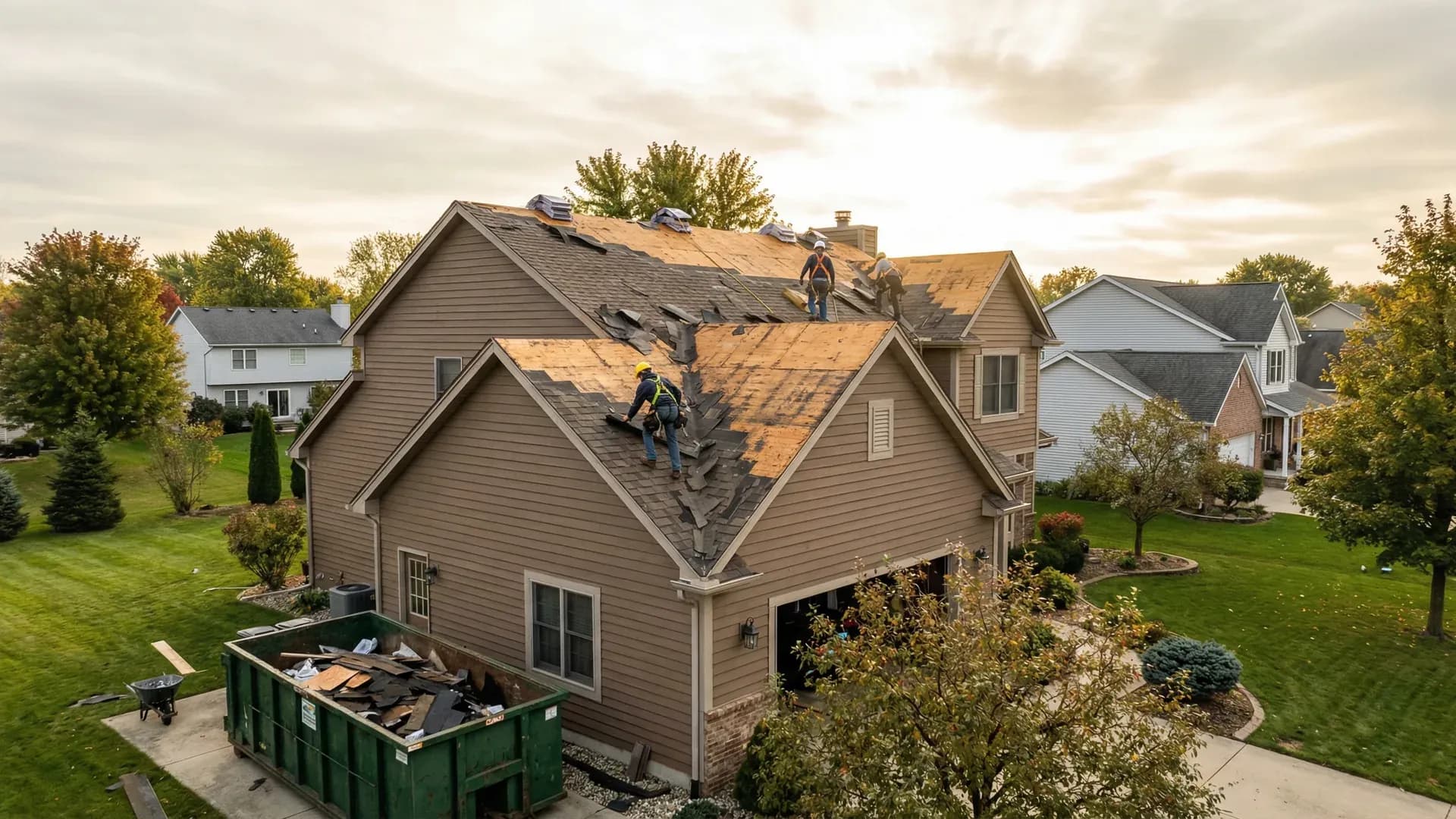
This is not something you can patch. A sagging roof deck requires tear-off, structural assessment, deck replacement, and new roofing. Delaying this repair risks a roof section collapsing under the weight of heavy snow - a genuine safety concern.
What to Do
If you see any visible sag in your roofline, don't go up on the roof yourself. Call a professional immediately. The deck may be too compromised to walk on safely. Skyline Roofing will assess the structural situation and give you a repair or replacement plan.
6. Leaks and Water Stains Inside
Brown or yellowish stains on your ceilings or walls are telltale signs of a roof leak. The frustrating part is that the stain rarely shows up directly below the leak's entry point. Water travels along rafters, pipes, and wiring before dripping onto the drywall, sometimes appearing feet away from where it's actually getting in.
A single leak from a failed piece of flashing or a popped nail might be a straightforward repair. But recurring leaks, multiple leak points, or leaks that appear after ordinary rain (not just major storms) typically indicate systemic roof failure. The underlayment has broken down, the shingle seal has failed, or both.
We see a lot of homeowners who've been putting buckets under a recurring leak for months or even years. Every day that water enters your home, it's damaging insulation, framing, drywall, and potentially creating mold behind walls. What starts as a roofing problem becomes an interior renovation problem. The repair cost grows every week you wait.
What to Do
If you have an active leak, get it inspected right away. Even if it seems minor, water inside the building is always urgent. We'll trace the leak to its source, determine whether a repair or replacement is the right solution, and give you a clear path forward.
7. Moss, Algae, or Mold Growth on the Roof Surface
Green moss or dark streaks on your roof aren't just cosmetic issues. Moss holds moisture against the shingle surface, accelerating deterioration. Algae (those dark black or green streaks) feeds on the limestone filler in shingle granules. Mold growth indicates persistent moisture that shouldn't be there.
North-facing roof slopes and areas shaded by trees are the most vulnerable, and northeast Indiana has plenty of both. Homes in wooded areas around the lakes in Kosciusko and Steuben counties are especially prone. Light moss can be treated with zinc strips or gentle cleaning, but heavy growth that's been accumulating for years usually means the shingles underneath are already compromised.
Important note: never pressure wash asphalt shingles. The force blasts off the protective granules and causes more damage than the moss itself. If someone tells you to pressure wash your roof, find a different contractor.
What to Do
Minor algae staining doesn't mean your roof needs replacing. But heavy moss growth, widespread mold, or biological growth combined with other warning signs on this list points toward replacement. Have a professional assess whether the shingles underneath are still sound.
What If You See Multiple Warning Signs?
Any single sign on this list might be a repair, not a replacement. Two or more showing up together is different. When your 22-year-old roof has curling shingles, heavy granule loss, and a water stain in the bedroom - that's a roof telling you it's done. Continuing to patch at that point costs more in the long run than replacing.
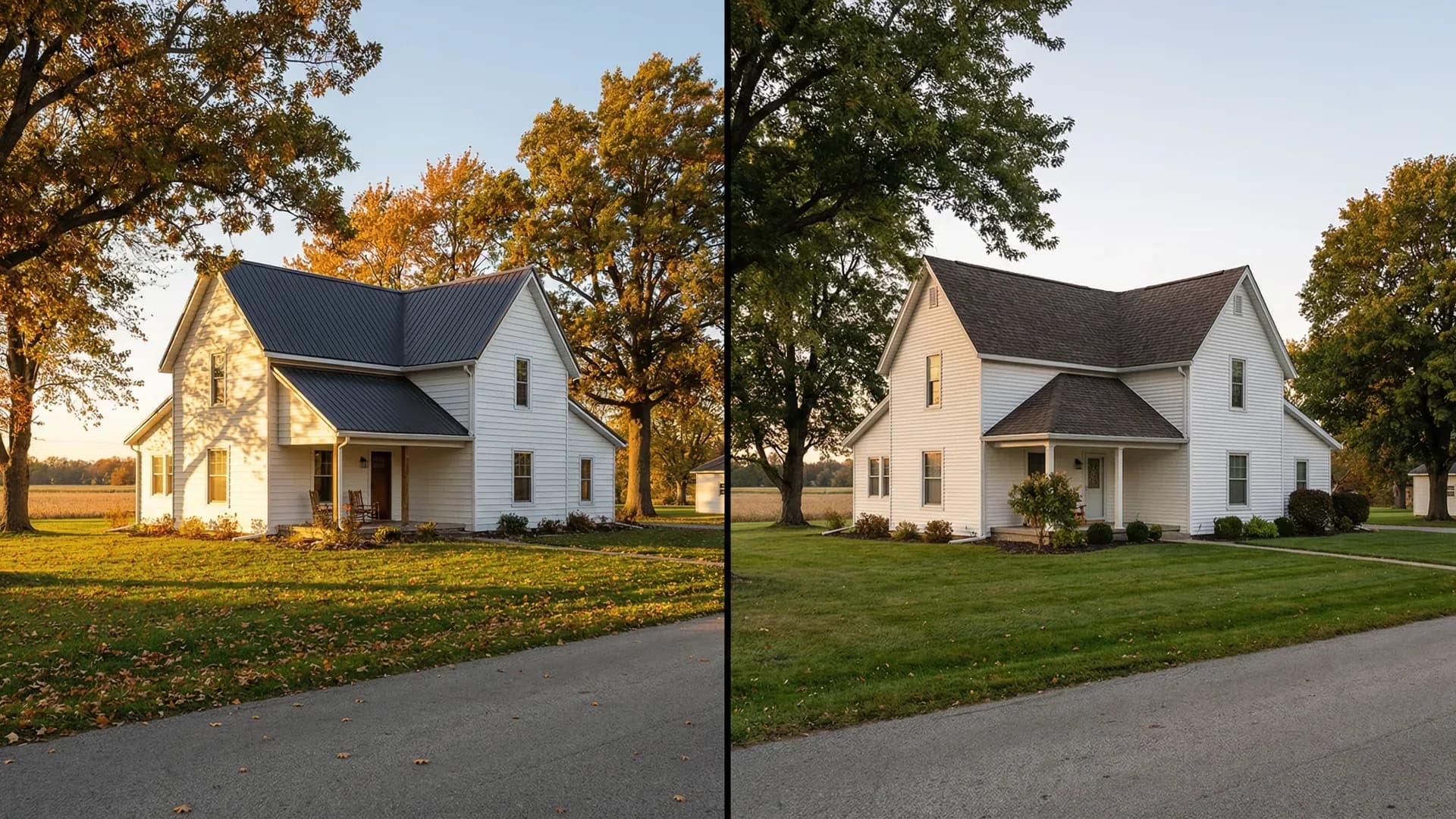
Here's a useful framework: if the cost of repairs would exceed 30% of a full replacement, you're better off putting that money toward a new roof. You get a fresh warranty, modern materials, better energy efficiency, and a reset on the maintenance clock.
Don't Wait for a Failure
The worst time to buy a roof is when you need one immediately. Emergency replacements are stressful, expensive, and leave you with less time to choose the right material and contractor. The best time is when you spot the early warning signs and can plan ahead - compare estimates, explore financing, and schedule the work on your timeline instead of the weather's.