Northeast Indiana gets hammered by storms. That's not an exaggeration - Noble, DeKalb, and the surrounding counties sit squarely in a corridor that sees severe thunderstorms, hail, straight-line winds, and the occasional tornado from late spring through early fall. And those winter ice storms aren't gentle, either. When a storm blows through and you suspect your roof took damage, the steps you take in the next 24 to 48 hours matter more than you might think.
Quick Answer
After storm damage hits your Indiana roof, stay safe and avoid climbing onto the roof yourself. Document all visible damage with photos and video from the ground. Make temporary repairs to prevent further water intrusion (tarps, buckets). Contact your insurance company within 24-48 hours. Schedule a professional roof inspection to assess the full scope of damage. Storm damage often warrants a full roof replacement rather than spot repairs.
Immediate Steps After the Storm Passes
First things first: make sure everyone's safe. Don't go outside until the storm has fully passed. Downed power lines, unstable trees, and debris create real hazards in the immediate aftermath. Once conditions are safe, here's your priority checklist.
1. Check for Interior Water Intrusion
Walk through every room and look up. Water stains on ceilings, dripping, bubbling paint, or wet spots on walls are all signs that water has breached the roof. Check your attic if you can safely access it - use a flashlight and look for daylight coming through, wet insulation, or active dripping. If water is actively coming in, place buckets to catch it and move valuables out of the affected area.
2. Assess Exterior Damage from the Ground
Resist the urge to grab a ladder. Climbing onto a storm-damaged roof is dangerous - the decking underneath may be compromised, wet surfaces are slippery, and you won't know what's structurally sound until a professional evaluates it. Instead, walk the perimeter of your home and look for these signs:
- Shingles or roofing material scattered on the ground or in the yard
- Visible gaps or missing sections on the roof surface
- Dented, bent, or detached gutters and downspouts
- Cracked or broken siding near the roofline
- Debris from trees resting on or lodged in the roof
- Granules (sandy material from shingles) accumulated in gutters or on the ground below downspouts
3. Document Everything You See
Pull out your phone and start recording. Photos and video are your strongest assets if you need to file an insurance claim. Capture wide-angle shots of the entire roof from each side of the house, close-ups of any visible damage, interior water damage, and ground-level debris. Timestamp everything. Save screenshots of weather alerts and radar images from the day of the storm - these establish that a covered weather event actually hit your specific location.
4. Make Temporary Protective Repairs
Your insurance policy requires you to take "reasonable steps" to prevent further damage. That doesn't mean fixing the roof - it means protecting it until proper repairs can happen. A tarp over an exposed area, a board over a broken skylight, or buckets catching active leaks all qualify. Keep receipts for any materials you purchase. Your insurer should reimburse reasonable emergency mitigation costs.
Do Not Attempt Permanent Repairs
Temporary protection is expected. Permanent repairs before the insurance adjuster inspects can result in a denied claim because the evidence of damage has been removed. Tarp it, don't fix it - not yet.
Types of Storm Damage That Affect Indiana Roofs
Not all storm damage looks the same, and some types are harder to spot than others. Understanding what you're dealing with helps you communicate with your contractor and your insurance company.
Hail Damage
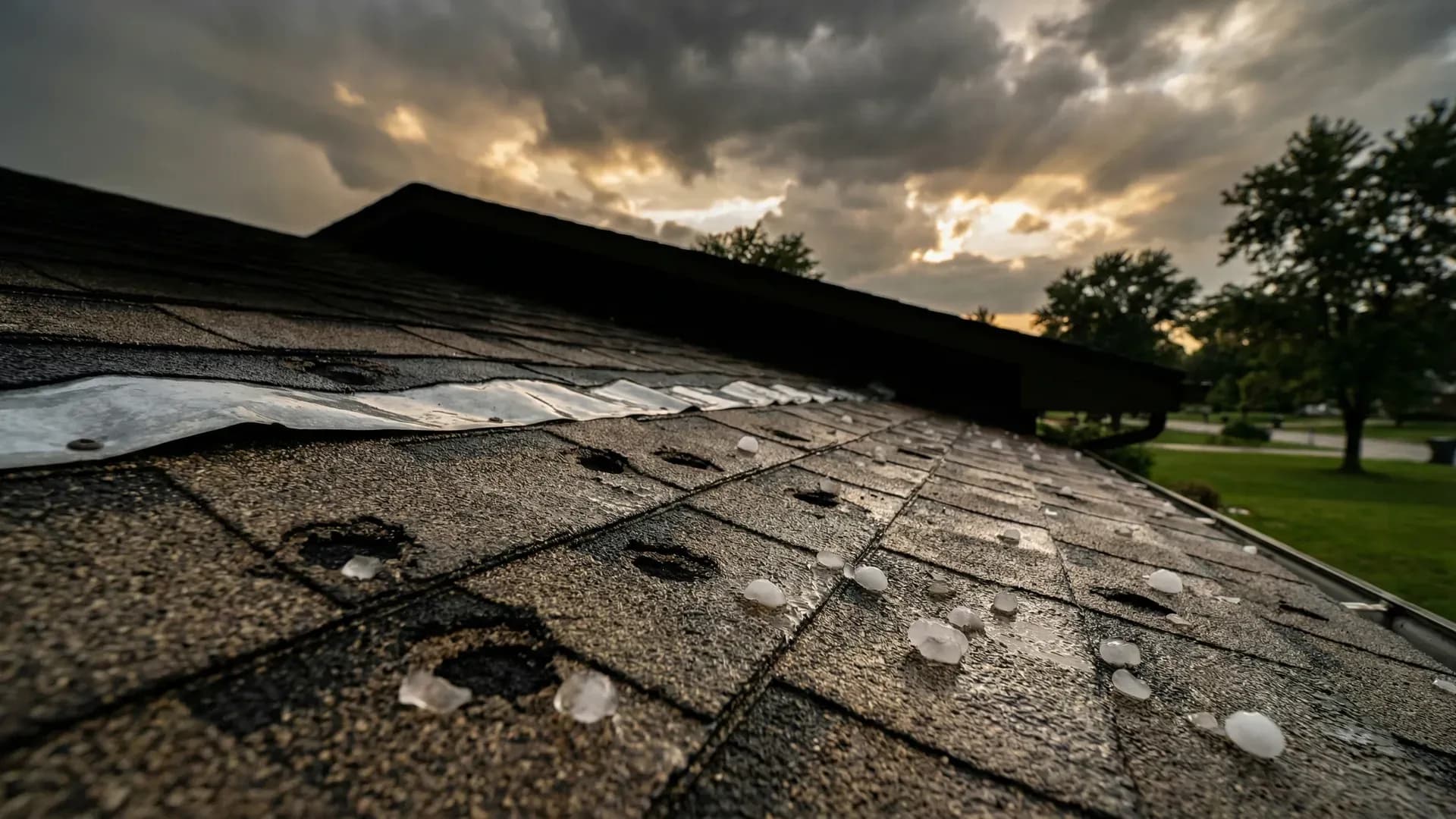
On metal roofs, hail leaves visible dents. On shingle roofs, it leaves bruises. Both compromise the roof's ability to shed water properly. And here's what a lot of homeowners don't realize: hail-damaged shingles that look "fine" from the ground will fail years earlier than they should. The granule layer is the shingle's sun and weather protection. Once that's compromised, UV degradation accelerates rapidly. What should've lasted 15 more years might fail in 5.
Wind Damage
Straight-line winds from thunderstorms routinely hit 60-80 mph in northeast Indiana. Those gusts lift shingle edges, break the adhesive seal strip, and in severe cases, peel shingles right off the deck. Wind damage tends to be most visible along roof edges, ridgelines, and on the windward side of the roof - the side facing the direction the storm came from.
Once a shingle lifts, even slightly, it becomes a lever. The next gust catches the raised edge and pulls harder. A single lifted shingle tab in June can become a bare patch by September if it's not addressed. Wind damage also affects ridge caps, which take the worst beating because they sit at the highest, most exposed point on the roof.
Fallen Tree and Debris Damage
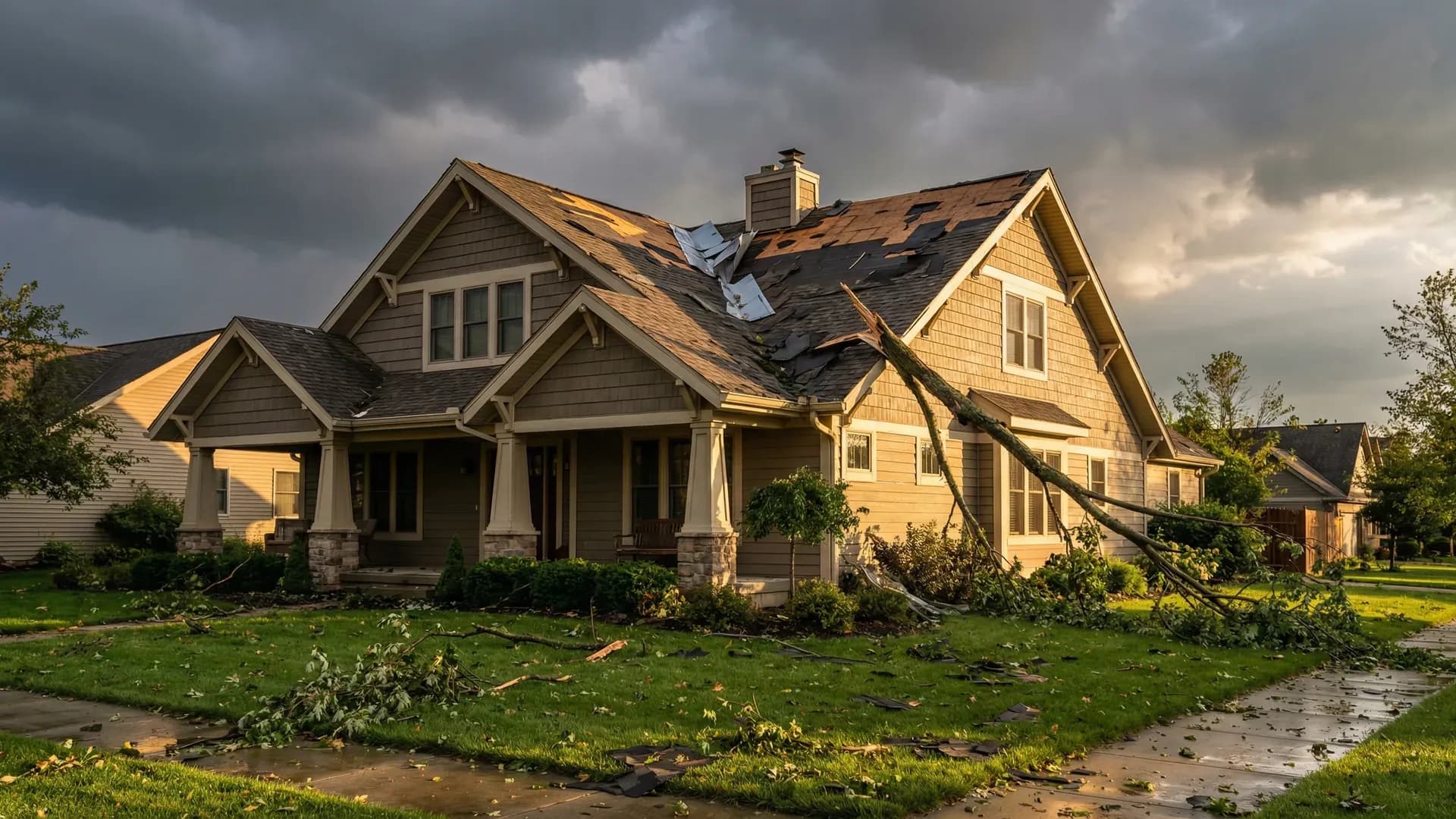
Large branches or entire trees falling on a roof create obvious, immediate damage. But smaller debris - broken branches, satellite dishes ripped loose, patio furniture picked up by wind - can puncture or crack roofing materials without being immediately obvious. After any storm, check for debris resting on your roof that might be hiding damage underneath.
Ice and Snow Damage
Winter storms bring their own set of problems. Ice dams - ridges of ice that form along the eave and trap melting snow behind them - force water underneath shingles and into the roof deck. The damage from ice dams often doesn't show up until spring, when homeowners notice water stains on their ceilings and realize the damage happened months ago. Heavy snow loads can also stress the roof structure itself, particularly on low-slope and flat roof sections.
Signs of Hidden Storm Damage Most Homeowners Miss
The damage you can see is only part of the picture. Storm damage often hides where you aren't looking.
- Granule loss in gutters - a sign of widespread hail impact across the entire roof surface, not just localized spots
- Dented roof vents and flashing - soft metal components dent before shingles crack, making them early indicators of hail severity
- Cracked pipe boots - the rubber seals around plumbing vents become brittle and crack from hail impact, creating slow leaks
- Lifted or buckled shingles - wind lifts edges that don't always lay back flat, creating future leak points
- Wet or compressed attic insulation - indicates water penetration even when ceiling stains haven't appeared yet
- Hairline cracks in shingle surface - only visible up close, these micro-fractures let water migrate underneath the shingle layer
Why Professional Inspection Matters
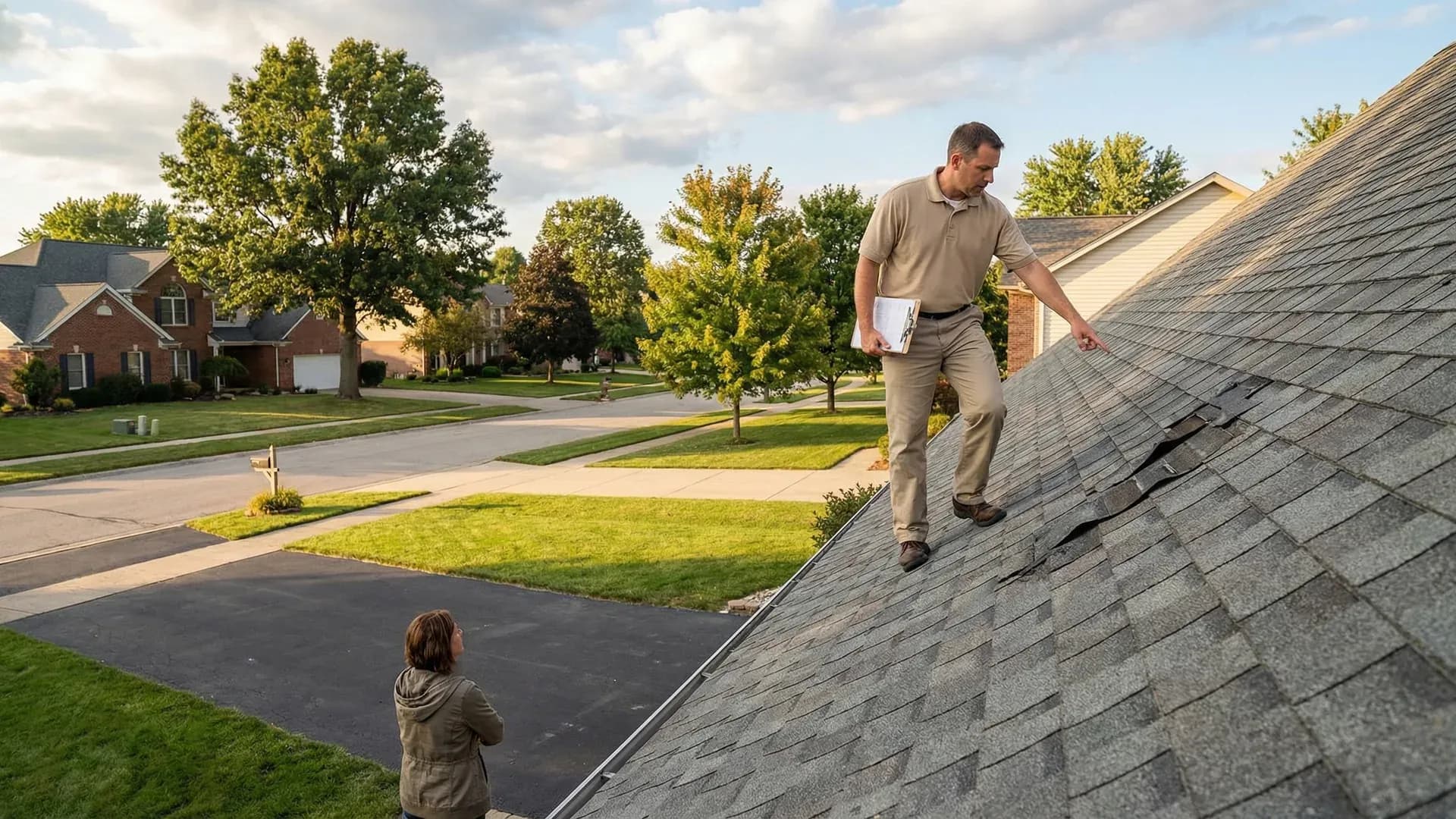
A trained roofing inspector can identify storm damage that's invisible from the ground. At Skyline Roofing, our inspectors walk the roof surface and check for soft spots in the decking, compromised flashing seals, granule displacement patterns, and structural stress indicators that homeowners simply can't see without getting up there. This inspection is free across all seven counties we serve in northeast Indiana.
When Storm Damage Means Full Roof Replacement
Here's something contractors won't always tell you upfront, so we will: a lot of storm-damaged roofs need replacement, not repair. That's not a sales pitch - it's reality. When hail impacts 30, 40, or all 50 squares of a roof, you can't just patch the 10 worst spots and call it good. The entire shingle surface has been compromised. Repairing scattered damage across a whole roof is often more expensive than tearing off and starting fresh, and it leaves you with a patchwork of old and new material that won't weather uniformly.
Insurance companies understand this. When an adjuster confirms widespread damage, the claim almost always covers full replacement rather than scattered repairs. That's actually good news for homeowners - you get a brand-new roof for the cost of your deductible instead of living with a compromised roof that was partially patched.
Repair vs. Replacement Decision Guide
| Situation | Likely Outcome |
|---|---|
| A few missing shingles from wind | Repair - localized fix |
| Hail damage across 25%+ of roof | Replacement - damage is too widespread to patch |
| Tree limb punctured one section | Repair or partial replacement - depends on structural damage |
| Hail + roof is 15+ years old | Replacement - pre-existing wear plus storm damage |
| Multiple leaks from ice dams | Replacement with ice & water shield - systemic issue |
When to Call a Roofing Contractor After a Storm
Call within 24 to 48 hours. Not because the roof can't wait a few days, but because storm season creates a backlog. After a major hail event hits DeKalb or Noble County, every roofing company within 100 miles gets flooded with calls. The homeowners who call first get inspected first, get their claims filed first, and get on the installation schedule first. Waiting two or three weeks means you're behind dozens of other homeowners competing for the same crews and materials.
Choose a local contractor, not a storm chaser. After every major storm, trucks with out-of-state plates show up in neighborhoods offering "free inspections" and pressuring homeowners to sign contracts on the spot. These crews are following the storm path. They'll do the job, collect the insurance check, and be gone. If there's a problem with the installation six months later, good luck finding them.
- Choose a contractor with a permanent local address - not just a phone number
- Ask for proof of workers' compensation and liability insurance
- Check reviews on Google, not just the contractor's website
- Get the workmanship warranty in writing before signing anything
- Never pay the full amount upfront - standard practice is a materials deposit with the balance due upon completion
- Verify the contractor will pull the required building permits in your municipality
What Skyline Roofing Does After a Storm
When you call Skyline Roofing after a storm, we don't start with a sales pitch. We start with an honest assessment. Our inspector walks your roof, documents every point of damage, and gives you a straightforward answer about whether you've got a repair situation or a replacement situation. If the damage warrants an insurance claim, we'll tell you. If it doesn't, we'll tell you that too.
We serve homeowners across Noble, DeKalb, Whitley, Elkhart, Kosciusko, LaGrange, and Steuben counties. We've been through every storm season this region throws at us, and we know what Indiana weather does to roofs. More importantly, we'll still be here next year and the year after that - which is more than storm chasers can promise.