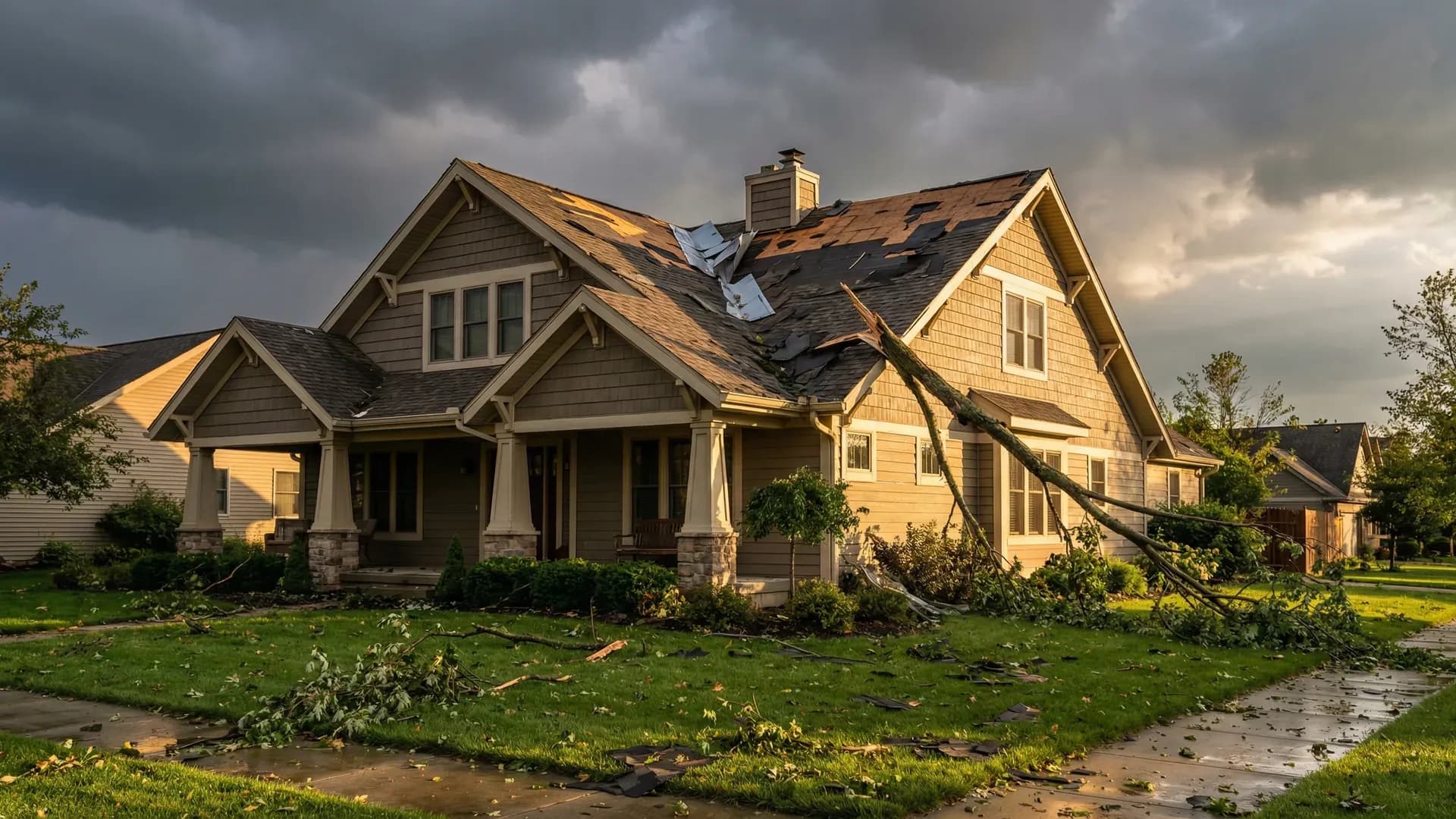
Your roof took a beating in last night's storm. Shingles are scattered across the yard, there's a water stain creeping across the bedroom ceiling, and you're staring at your homeowner's insurance policy wondering where to even start. Sound familiar? You're not alone. Thousands of Indiana homeowners file roof damage claims every year, and the process trips up more people than it should.
The good news is that most standard homeowner's policies in Indiana cover sudden storm damage to your roof. The bad news? Insurance companies aren't exactly falling over themselves to write you a check. Knowing how the claims process works - and what mistakes to avoid - can mean the difference between a full roof replacement covered by your policy and a denied claim that leaves you paying out of pocket.
Quick Answer
To file a roof insurance claim in Indiana, document all damage with photos and video immediately after the storm, contact your insurance company within 24-48 hours, schedule a professional roof inspection, meet with the insurance adjuster, review your settlement offer, and hire a reputable roofing contractor. Most Indiana homeowner's policies cover sudden storm damage including hail, wind, and fallen debris.
What Does Indiana Homeowner's Insurance Actually Cover?
Before you pick up the phone, it helps to understand what your policy will and won't pay for. Indiana homeowner's insurance policies typically cover roof damage caused by sudden, accidental events. That includes hail, high winds, tornadoes, fallen trees, lightning strikes, and the weight of ice or snow. These are classified as "covered perils" under most HO-3 policies, which is the standard homeowner's policy in the state.
What won't get covered? Gradual wear and tear. If your 25-year-old shingle roof is just worn out, that's considered a maintenance issue, not an insurable event. Same goes for damage that's been sitting unaddressed for months - insurers expect you to take reasonable steps to maintain your property. Neglect isn't a covered peril.
Here's where it gets tricky, though. A storm can cause legitimate damage to a roof that's also showing its age. A good roofing contractor can help you distinguish between storm damage and pre-existing wear, and that distinction matters enormously when your adjuster shows up.
Step-by-Step: Filing Your Roof Insurance Claim
Follow these steps in order. Skipping ahead or missing documentation early in the process creates headaches later that are tough to fix.
Step 1: Document Everything Before You Touch Anything
This is the most important step, and the one homeowners most often rush through. Grab your phone and start taking pictures and video of every piece of visible damage - from the ground, from windows, from any safe vantage point. Capture the shingles in the yard, the dented gutters, the water stains inside, the hail dents on your AC unit and cars. All of it.
- Photograph damage from multiple angles in good lighting
- Take wide shots showing overall roof condition plus close-ups of specific damage
- Document interior water damage (ceilings, walls, attic)
- Photograph ground-level evidence like fallen shingles, granules in gutters, dented downspouts
- Record video walking around the entire property exterior
- Note the date, time, and weather conditions of the storm
- Save local weather reports and any severe weather alerts for your area
Don't Make Permanent Repairs Yet
You're expected to prevent further damage - covering a hole with a tarp, for example - but don't start permanent repairs before the adjuster inspects. Permanent repairs before an inspection can give the insurer grounds to reduce or deny your claim. Temporary protective measures are fine and expected. Keep receipts for any emergency materials you buy.
Step 2: Contact Your Insurance Company
Call your insurer within 24 to 48 hours of discovering the damage. Most Indiana policies don't specify an exact deadline, but waiting too long raises red flags. When you call, you'll file what's called a "first notice of loss." The representative will ask basic questions about the damage and assign you a claim number.
Write down your claim number immediately. You'll reference it in every future conversation. Ask the representative what your deductible is (typically $1,000 to $2,500 for wind and hail in Indiana), what documentation they need, and when you can expect an adjuster to be assigned.
Step 3: Get a Professional Roof Inspection
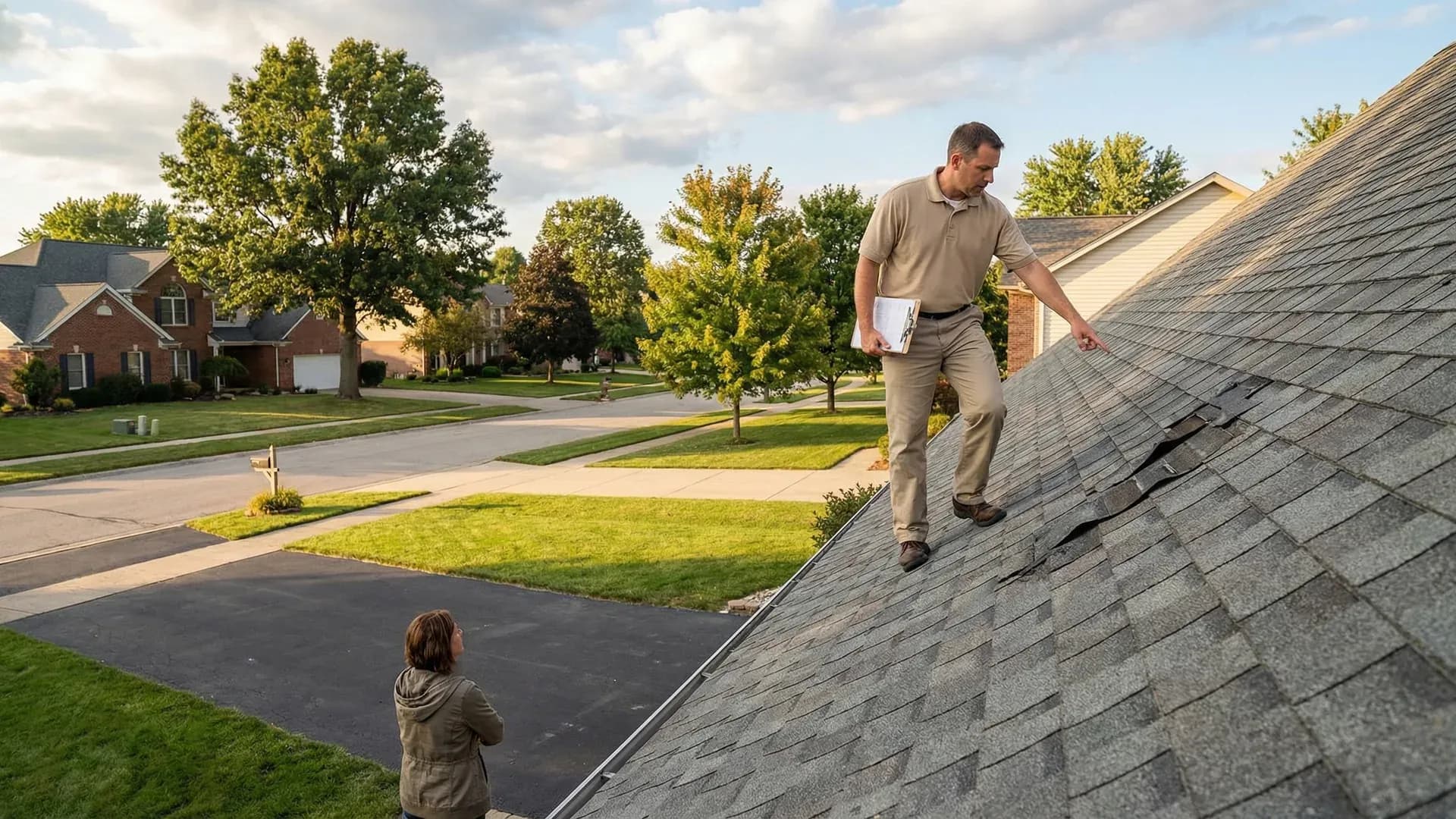
Don't wait for the insurance adjuster to be your only set of eyes on the roof. Schedule an independent inspection with a reputable local roofing contractor before the adjuster visit. A good contractor will climb up there, assess the full scope of damage, and provide a detailed written estimate.
Why does this matter? Because insurance adjusters are human, and they're working for the insurance company. They can miss things. They sometimes underestimate damage. Having your own professional inspection report gives you documentation to push back if the adjuster's assessment comes in low. At Skyline Roofing, we provide free storm damage inspections throughout northeast Indiana - we've seen hundreds of storm-damaged roofs across Noble, DeKalb, and the surrounding counties, and we know exactly what adjusters look for.
Step 4: Meet with the Insurance Adjuster
The insurance company will send an adjuster to inspect your roof in person. This typically happens within one to two weeks of filing your claim, though it can take longer after major storms when adjusters are handling hundreds of claims across the region.
Here's a tip most people miss: ask your roofing contractor to be present during the adjuster's inspection. A knowledgeable contractor can walk the roof with the adjuster, point out damage that might be overlooked, and speak the same technical language. This isn't confrontational - it's collaborative, and it leads to more accurate assessments.
- Be home during the adjuster's visit
- Share your photos, video, and the contractor's inspection report
- Point out all interior water damage
- Ask questions about anything you don't understand
- Request a copy of the adjuster's report when it's complete
Step 5: Review Your Settlement Offer
After the inspection, you'll receive a settlement offer from your insurance company. This document breaks down what they're willing to pay, minus your deductible. Read it carefully. The initial offer isn't necessarily the final word.
Indiana uses what's called an "actual cash value" (ACV) versus "replacement cost value" (RCV) distinction. With ACV, you get paid the depreciated value of your roof. With RCV - which is more common and more favorable - you get enough to replace the roof at current prices. However, many RCV policies pay in two installments: the ACV amount upfront, and the depreciation holdback after you complete the repairs and submit proof.
Understanding ACV vs. RCV Payments
If your roof replacement cost is $18,000 and depreciation is $5,000, you'll receive $13,000 minus your deductible initially. After repairs are complete and you submit documentation, the insurer releases the remaining $5,000 depreciation holdback. Make sure you understand which type of policy you have before accepting any offer.
Step 6: Negotiate If Necessary
If the settlement offer doesn't cover the actual cost of proper repairs, you have every right to negotiate. Provide your contractor's detailed estimate as counter-documentation. Most insurers will review supplemental information and adjust their offer. This isn't unusual - it happens on a significant percentage of claims.
If negotiations stall, Indiana homeowners have options. You can request a re-inspection by a different adjuster, hire a public adjuster to represent your interests (they typically charge 10-15% of the settlement), or file a complaint with the Indiana Department of Insurance. Litigation is a last resort, but it's there if you need it.
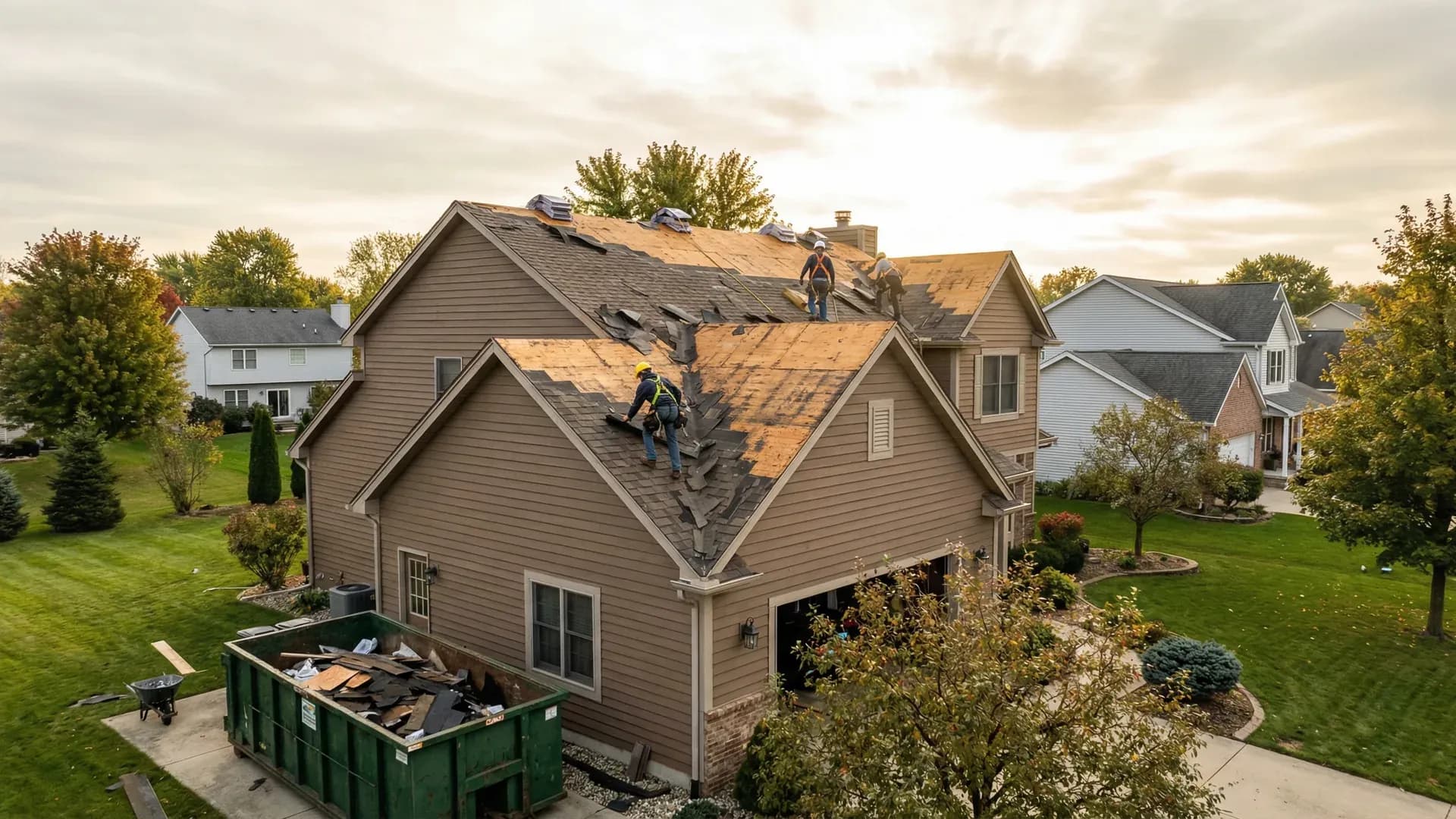
Step 7: Choose Your Contractor and Schedule the Work
Choose a contractor who's experienced with insurance restoration work. They should be willing to work directly with your insurance company, provide a detailed scope of work that matches the approved claim, and stand behind their installation with a workmanship warranty. Avoid storm chasers - out-of-town crews that follow storms and disappear after the job. They won't be around in two years when something goes wrong.
Common Mistakes That Get Indiana Claims Denied
Insurance companies deny roof claims more often than you'd think. Here are the most common reasons we see in northeast Indiana:
- Waiting too long to file - delays suggest the damage isn't from the reported storm
- Insufficient documentation - no photos, no inspection report, no proof of when damage occurred
- Pre-existing damage - if the roof was already in poor condition, the insurer may attribute damage to neglect rather than the storm
- Making permanent repairs before the adjuster inspects - this eliminates the evidence
- Filing too many small claims - multiple claims in a short period can lead to policy cancellation or non-renewal
- Not understanding your deductible - if damage is close to your deductible amount, filing may not be worthwhile
How Much Does a Roof Replacement Cost Through Insurance in Indiana?
The total cost of an insurance-covered roof replacement in Indiana varies based on roof size, material, pitch, and complexity. For a typical 2,000-square-foot home with a moderate-pitch roof, here's what you can expect:
Average Roof Replacement Costs in Northeast Indiana
| Roofing Material | Average Cost Range | Insurance Coverage |
|---|---|---|
| Architectural Shingles | $8,000–$15,000 | Typically covered at full RCV |
| Standing Seam Metal | $15,000–$30,000 | Covered if replacing like-for-like material |
| TPO/EPDM (Low-Slope) | $6,000–$18,000 | Covered for storm damage to flat/low-slope sections |
Your out-of-pocket expense on an approved claim is typically just your deductible - $1,000 to $2,500 for most Indiana policies. The insurance company covers the rest. That means a $14,000 roof replacement might cost you only $1,500 out of pocket if your claim is properly documented and approved.
Financing Your Deductible
If your deductible is a stretch, ask about financing options. Skyline Roofing works with 3 Rivers Federal Credit Union to provide affordable payment plans that cover your out-of-pocket costs while your insurance handles the bulk of the replacement.
Should You File a Claim or Pay Out of Pocket?
Not every instance of roof damage warrants a claim. If the repair cost is close to your deductible - say, $800 in damage against a $1,000 deductible - filing a claim just creates a record with your insurer for minimal payout. That claim history can affect your premiums at renewal time.
File a claim when the damage clearly exceeds your deductible by a significant margin. A few missing shingles? Probably better to handle privately. Twenty or thirty squares of hail-pocked shingles needing a full tear-off? That's absolutely an insurance claim. When in doubt, get a professional inspection first. The inspector can tell you whether you're looking at a $400 repair or a $12,000 replacement, and that information drives the decision.
Indiana-Specific Insurance Considerations
Indiana's insurance landscape has some quirks worth knowing. The state doesn't cap insurance rates the way some states do, which means your premiums and deductibles can vary significantly between carriers. Shopping your policy every few years is smart - but do it before you need to file a claim, not after.
- Indiana law requires insurers to acknowledge claims within 15 days and make a coverage decision within a reasonable time
- Wind and hail deductibles may be separate from your standard deductible - check your declarations page
- Indiana experiences an average of 20-30 hail events per year, with peak activity from April through August
- Some Indiana insurers offer "roof endorsements" that limit payout on older roofs to ACV instead of RCV
- The Indiana Department of Insurance handles consumer complaints and can intervene if your insurer acts in bad faith
Working with Skyline Roofing on Your Insurance Claim
- Free storm damage inspection - we assess your roof and document all damage with photos and measurements
- Written damage report - you get a detailed report to share with your insurance company
- Adjuster coordination - we'll be present during the adjuster's visit to ensure nothing gets missed
- Supplement assistance - if the initial settlement falls short, we handle the supplemental documentation
- Full roof replacement - once approved, we install your new roof with quality materials and a workmanship warranty
The bottom line? A storm-damaged roof that qualifies for an insurance claim is often an opportunity to get a brand-new roof for just the cost of your deductible. But only if you handle the process correctly from day one. Document everything, file promptly, get an independent inspection, and work with a local contractor who knows the insurance game inside and out.
If you've had recent storm damage in northeast Indiana, don't wait. Call Skyline Roofing at (260) 205-8448 for a free inspection. We'll tell you honestly whether you've got a valid claim - and if you do, we'll help you through every step of the process.