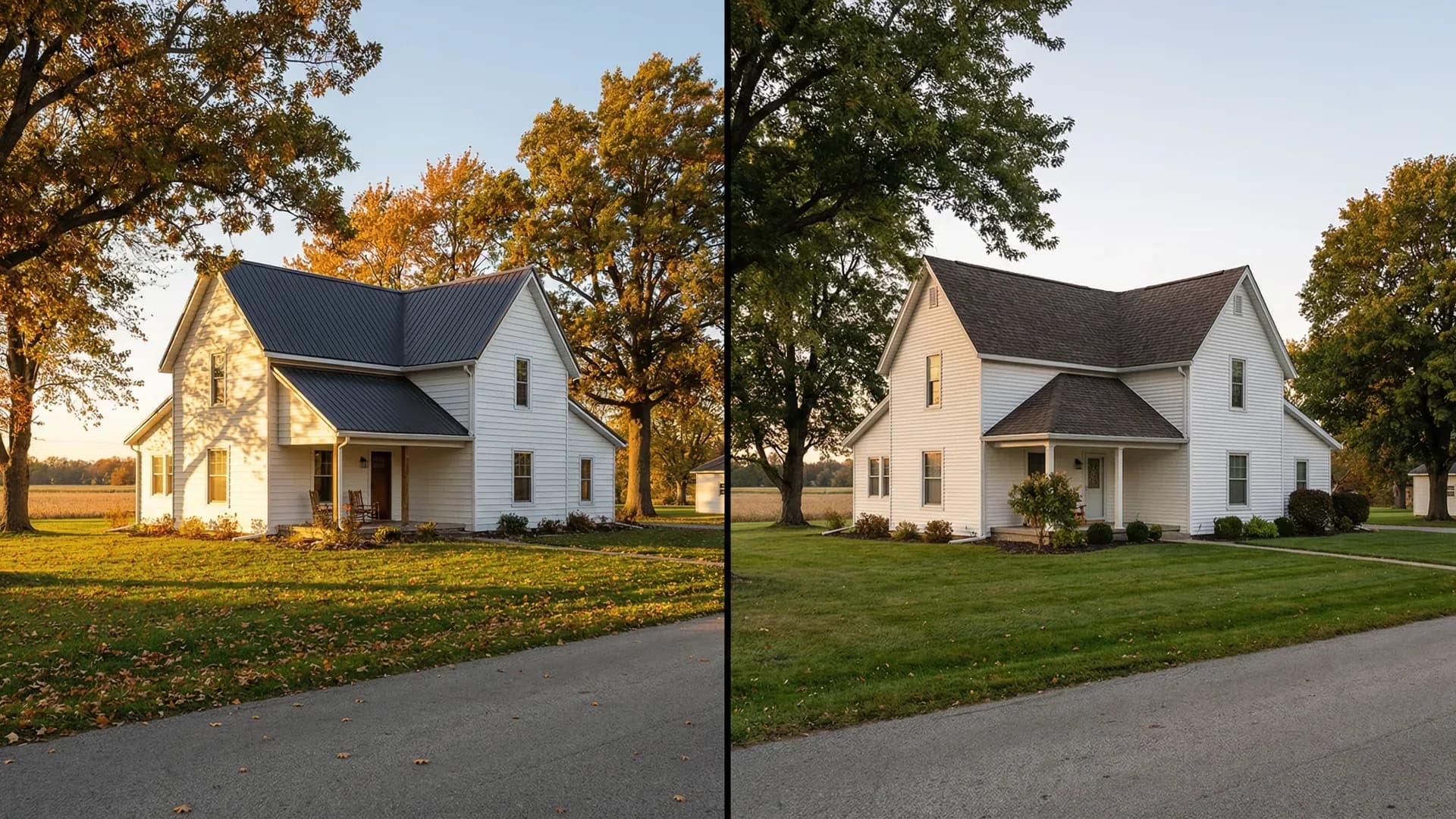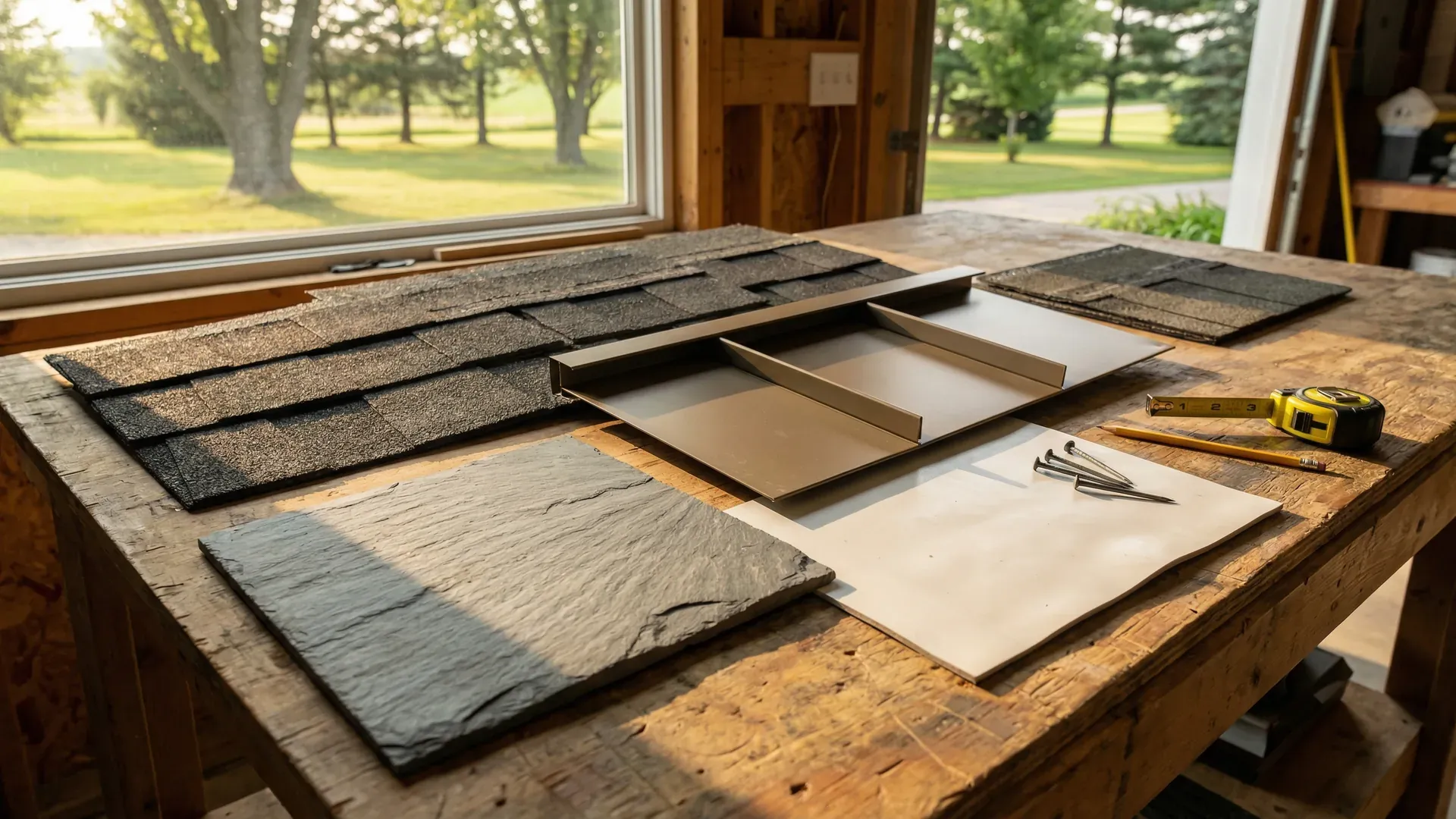
These two metal roofing styles look different, install differently, cost different amounts, and perform differently over the long haul. Picking the wrong one doesn't mean your roof will fail - both are solid options - but choosing the right one means you'll get better value, a look you actually love, and performance matched to your home's specific needs. Let's break it down honestly.
What Is Standing Seam Metal Roofing?
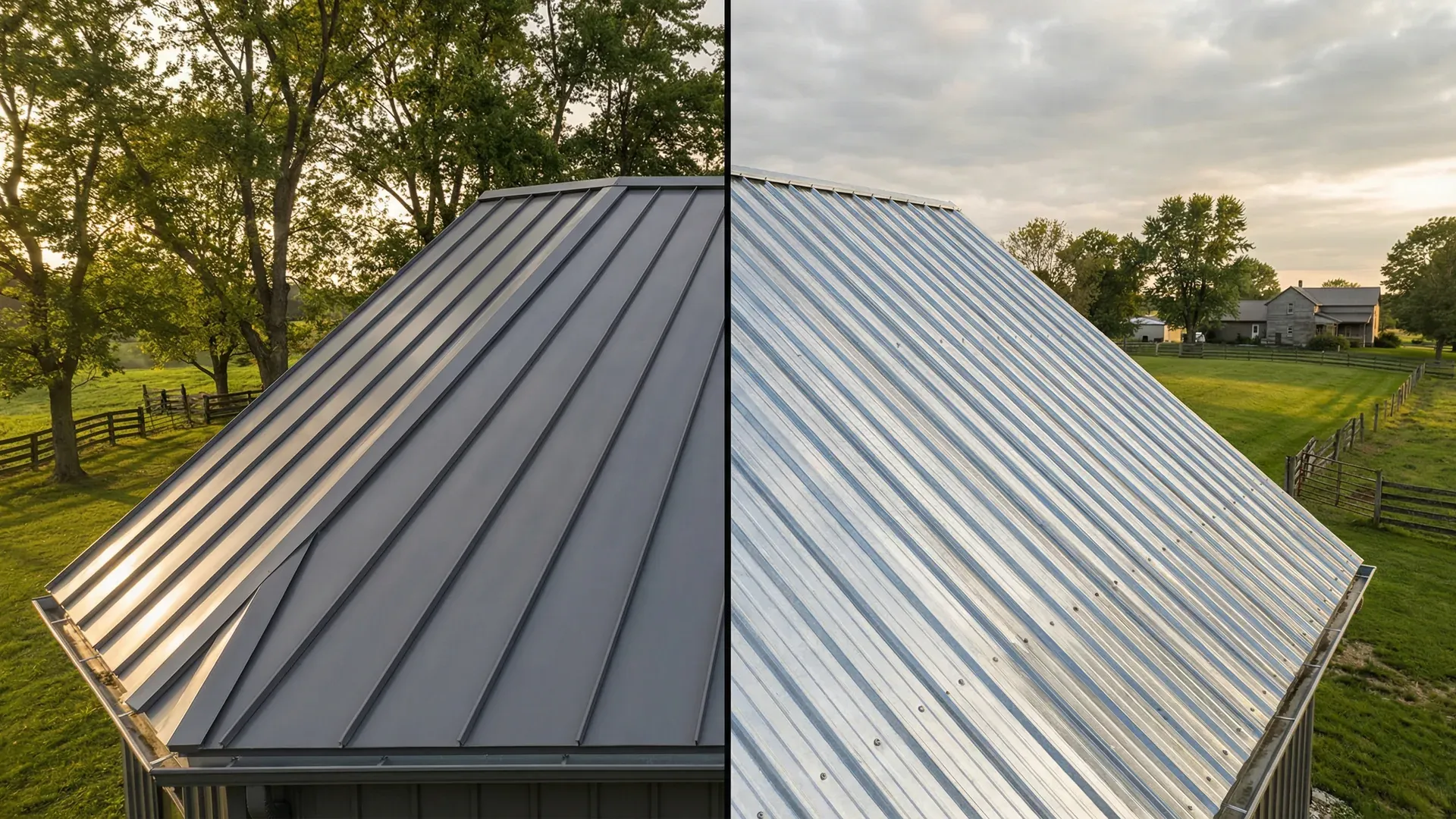
Standing seam roofing uses long vertical panels that run from the ridge to the eave, connected by raised seams that interlock and stand above the flat panel surface. Those raised seams - typically 1 to 2 inches tall - are the defining visual feature. They create clean, bold vertical lines that give the roof a modern, architectural look.
The critical engineering advantage is in how these panels attach to the roof. Standing seam systems use concealed fasteners - the clips and screws are hidden beneath the seam, completely protected from weather exposure. No fastener penetrations through the panel surface means no potential leak points from screw holes that expand and contract with temperature changes. This is a big deal in Indiana, where we see temperature swings of 100°F or more between summer highs and winter lows.
How Long Does Standing Seam Metal Roofing Last?
Standing seam metal roofing typically lasts 40 to 70 years when properly installed. Its concealed fastener system eliminates exposed screw holes - the most common failure point on metal roofs - making it one of the longest-lasting residential roofing options available. Many standing seam roofs outlast the mortgage on the homes they protect.
What Is Corrugated Metal Roofing?
Corrugated metal roofing features panels with a repeating wave or ribbed pattern. It's the style most people picture when they think of a metal roof - you see it on barns, agricultural buildings, and increasingly on homes throughout the Midwest. The corrugated profile gives the panels structural rigidity, allowing them to span wider areas with less underlying support.
Corrugated panels use exposed fasteners - screws driven directly through the panel face into the roof deck. Each screw gets a rubber washer to seal against water intrusion. The system works well, but those rubber washers degrade over time. After 15 to 20 years of UV exposure and thermal cycling, they can crack, compress, or lose their seal. When that happens, water follows the screw shaft down into your decking. It's the Achilles' heel of exposed-fastener metal roofing, and it's the main reason corrugated roofs require more maintenance attention than standing seam.
Side-by-Side Comparison
Standing seam vs corrugated metal roofing comparison
| Feature | Standing Seam | Corrugated |
|---|---|---|
| Typical Cost (installed) | $8–$14 per sq ft | $4–$8 per sq ft |
| Lifespan | 40–70 years | 25–40 years |
| Fastener System | Concealed (hidden clips) | Exposed (screws through panel) |
| Leak Risk Over Time | Very low | Moderate (washer degradation) |
| Appearance | Modern, sleek vertical lines | Traditional, agricultural-inspired |
| Maintenance | Minimal - inspect annually | Re-seal screws every 15–20 years |
| Wind Resistance | Excellent (interlocking seams) | Good (dependent on fastener integrity) |
| Snow Shedding | Excellent (smooth flat panels) | Good (snow catches slightly on ridges) |
| DIY Friendly | No - requires specialized tools | Somewhat - simpler installation |
| Best For | Homes, premium projects | Outbuildings, budget-conscious homes |
Cost: The Biggest Differentiator
Standing seam costs roughly twice as much as corrugated for materials and installation. On a 2,000-square-foot home in northeast Indiana, you're looking at approximately $16,000 to $28,000 for standing seam versus $8,000 to $16,000 for corrugated. That's a real gap, and for many homeowners it's the deciding factor.
But cost per year tells a different story. Standing seam's 40-to-70-year lifespan versus corrugated's 25-to-40-year lifespan means the per-year cost of ownership often comes out similar - or even favors standing seam. Factor in the re-sealing maintenance that corrugated requires around the 15-to-20-year mark and the math tightens further. If you're planning to stay in your home long-term, standing seam's higher upfront cost starts looking like the smarter investment.
What Does a Metal Roof Cost in Indiana?
In northeast Indiana, installed metal roofing costs range from $4 to $8 per square foot for corrugated panels and $8 to $14 per square foot for standing seam systems. For a typical 2,000-square-foot home, that translates to roughly $8,000 to $16,000 for corrugated and $16,000 to $28,000 for standing seam. Final cost depends on roof complexity, material gauge, and finish options. Financing is available through 3 Rivers Federal Credit Union.
Durability and Weather Performance in Indiana
Both standing seam and corrugated metal roofs handle Indiana weather far better than asphalt shingles. Metal doesn't crack in freeze-thaw cycles, sheds snow efficiently, and resists wind speeds that would strip shingles off a conventional roof. But there are performance differences worth understanding.
Standing seam's interlocking seam design gives it a genuine edge in high wind conditions. The panels lock together mechanically, creating a continuous surface that wind struggles to peel apart. Corrugated panels rely on their fasteners to resist wind uplift - and if a screw loosens or a washer fails, that's where wind gets underneath. During severe storms, standing seam simply holds tighter.
Snow performance splits slightly too. Standing seam's flat, smooth panel surfaces let snow slide off cleanly. Corrugated ridges can trap small amounts of snow along each wave, creating minor ice dam potential in prolonged cold snaps. For most Indiana homes this isn't a dealbreaker, but on lower-pitched roofs where snow accumulates more, standing seam has a measurable advantage.
Appearance and Curb Appeal
Aesthetics are subjective, but there's a clear pattern in what works on residential homes versus agricultural or commercial structures. Standing seam looks at home on modern, craftsman, and transitional-style houses. Its clean vertical lines complement contemporary architecture and add visual value to the home. Corrugated reads more rustic and utilitarian - which works beautifully on farmhouses, pole barns, and outbuildings but can look out of place on a colonial or ranch-style home in a suburban neighborhood.
Both styles come in a wide range of colors and finishes. Kynar/PVDF coatings on either type resist fading and chalking for decades. Color selection matters less than style selection when it comes to neighborhood fit. If you're in a subdivision with HOA oversight, check their guidelines - some restrict corrugated profiles on primary residences but allow standing seam.
Skyline's Ultra Pro Panel: A Third Option
At Skyline Roofing Systems, we install standing seam, corrugated, and a third option that splits the difference: Ultra Pro panels. These are engineered steel panels with a hidden fastener system and a lower-profile rib design. They give you the concealed-fastener reliability of standing seam with a more subtle appearance and a price point between corrugated and full standing seam.
Ultra Pro panels work well on homes where the homeowner wants the long-term performance of concealed fasteners without the bold vertical lines of traditional standing seam. We've installed them on ranches, Cape Cods, and two-story colonials across Noble and DeKalb counties with excellent results. They're worth considering if you're drawn to metal roofing's durability but aren't sold on either the corrugated or standing seam look.
Installation Differences
Standing seam installation takes longer and requires specialized equipment. Panels are often roll-formed on site to the exact length of your roof, eliminating horizontal seams entirely. The concealed clip system demands precise alignment and careful thermal expansion planning. It's not a DIY project, and not every roofing contractor does it well. You want a crew with specific metal roofing experience - not a shingle crew that dabbles in metal occasionally.
Corrugated installation is more straightforward. Pre-cut panels are screwed directly to the roof deck through pre-drilled holes. Faster installation means lower labor costs, which contributes to the price difference. A skilled crew can complete a corrugated roof faster than standing seam, but cutting corners on screw spacing or washer quality will come back to haunt you within a decade.
Maintenance: Where the Difference Compounds
A standing seam roof installed correctly is about as low-maintenance as a roof gets. Annual visual inspections, occasional gutter cleaning, and clearing any debris from valleys or penetrations - that's the extent of it. There are no exposed fasteners to reseal, no rubber washers to replace. The roof just does its job, decade after decade.
Corrugated roofs need more active attention. Plan on inspecting all exposed fasteners every 5 years and resealing or replacing degraded washers around the 15-to-20-year mark. That maintenance isn't expensive, but if you skip it, you'll start seeing leaks at screw penetrations - and tracking down which of 500 screws is the problem isn't fun. For homeowners who prefer a "set it and forget it" approach, standing seam wins this category convincingly.
Which Should You Choose?
There's no universally right answer. Your budget, your home's architecture, how long you plan to live there, and how much maintenance you're willing to do all factor in. Here's a simple framework to help you decide.
Choose standing seam if:
- You plan to stay in the home 20+ years and want a one-time investment
- Low maintenance is a high priority
- Your home's architecture suits modern or contemporary lines
- You're in a wind-prone area and want maximum storm resistance
- Long-term cost of ownership matters more than upfront price
Choose corrugated if:
- Your budget is the primary constraint and you need to stay under a specific number
- You're roofing an outbuilding, pole barn, or secondary structure
- The rustic or agricultural aesthetic matches your home's style
- You're comfortable with periodic fastener maintenance
- You're planning to sell the home within 10–15 years
Not Sure? Start with an Inspection
Your roof's pitch, existing decking condition, and structural capacity all influence which metal roofing style makes the most sense. A professional inspection can identify factors you might not see from the ground. Skyline Roofing offers free roof inspections across all seven counties we serve in northeast Indiana.
Get Expert Metal Roofing Advice
Skyline Roofing Systems installs standing seam, corrugated, and Ultra Pro metal roofing throughout Noble, DeKalb, Whitley, Elkhart, Kosciusko, LaGrange, and Steuben counties. We've been helping homeowners across northeast Indiana choose the right metal roof for their homes, their budgets, and their long-term goals.