Quick Answer
Metal roofs cost 2–3x more upfront but last 40–70 years with almost zero maintenance. Asphalt shingles cost less initially and work great for 20–30 years. For Indiana homeowners planning to stay in their home 15+ years, metal roofing typically delivers better lifetime value. For tighter budgets or shorter timelines, architectural shingles remain an excellent choice.
The Head-to-Head Comparison
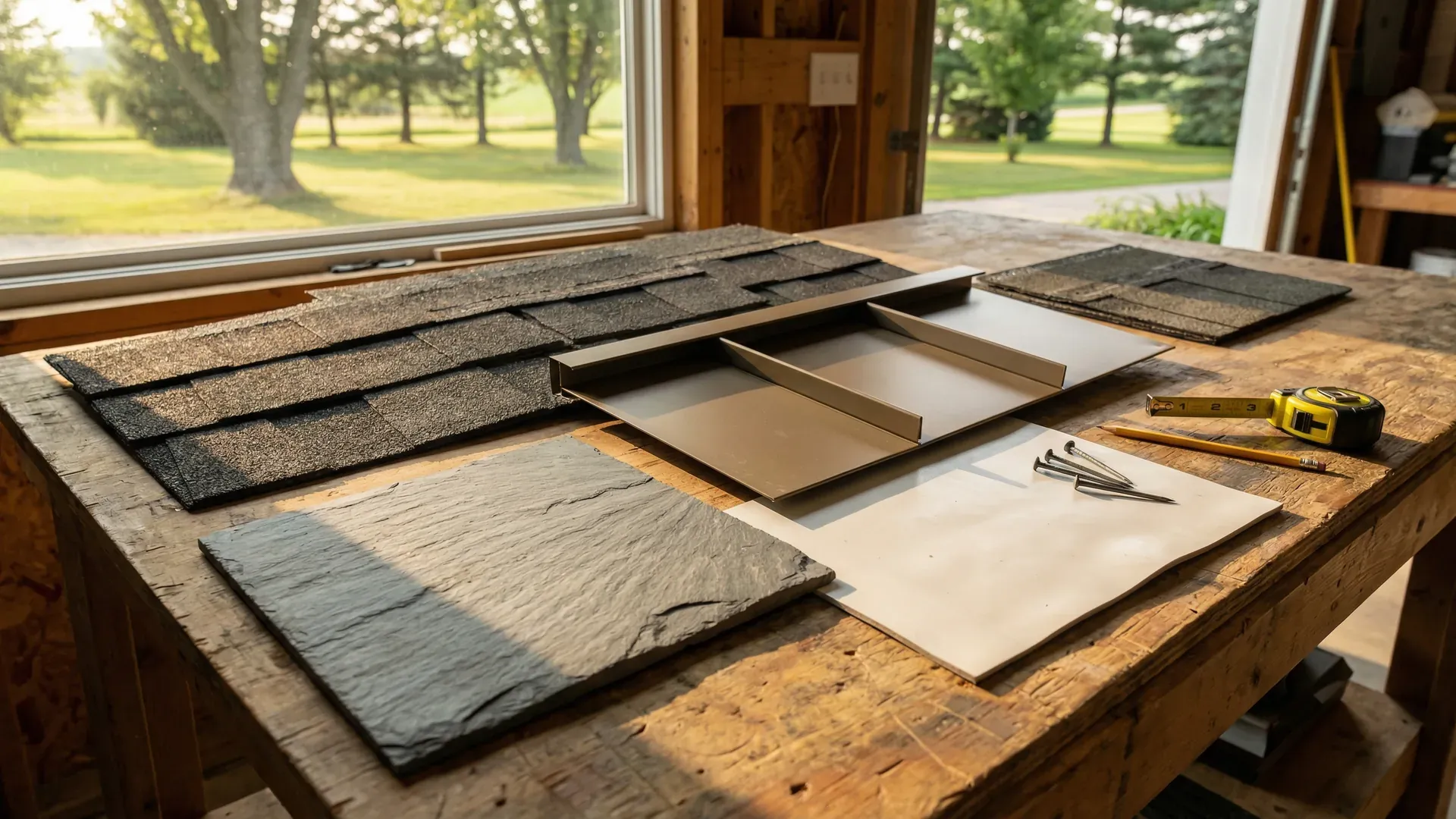
Before we get into the details, here's a side-by-side overview of how these two materials stack up across the categories that matter most to Indiana homeowners.
Metal Roofing vs. Asphalt Shingles: Full Comparison
| Category | Metal Roofing | Asphalt Shingles |
|---|---|---|
| Lifespan | 40–70 years | 20–30 years |
| Installed Cost (avg. home) | $18,000–$30,000 | $8,000–$15,000 |
| Maintenance | Minimal - occasional fastener check | Moderate - periodic inspections, granule loss monitoring |
| Energy Efficiency | High - reflective coatings cut cooling costs 10–25% | Moderate - cool-roof shingles available at extra cost |
| Wind Resistance | Up to 140 mph (standing seam) | Up to 130 mph (Class H architectural) |
| Hail Resistance | Class 4 impact rating standard | Class 3–4 available (impact-resistant lines) |
| Appearance Options | 15–20 colors, vertical panel or standing seam profiles | Hundreds of colors and styles, mimics slate or wood |
| Weight | 1.0–1.5 lbs/sq ft | 2.5–4.0 lbs/sq ft |
| Snow Shedding | Excellent - smooth surface sheds snow naturally | Fair - textured surface holds snow longer |
| Resale Value | Recovers 60–70% of cost at sale | Recovers 60–68% of cost at sale |
Lifespan: Where Metal Pulls Ahead
This is the single biggest difference between the two materials, and it's not close. A properly installed metal roof in northeast Indiana will last 40 to 70 years. We've seen steel roofs on agricultural buildings in Noble County that have been up for five decades with nothing more than an occasional coat of paint.
Asphalt shingles, even high-quality architectural shingles, typically need replacing after 20 to 30 years. That means a homeowner in their 30s or 40s who installs shingles today will likely pay for another full roof replacement before retirement. With metal, you install it once and you're done.
Lifetime Cost Perspective
Over a 50-year period, a metal roof at $22,000 costs roughly $440 per year. Two shingle roofs at $12,000 each totals $24,000, or $480 per year - and that doesn't account for inflation making that second replacement more expensive.
Upfront Cost: Shingles Win on Price Tag
There's no getting around it - metal roofing costs more to install. For an average 2,000-square-foot home in our area, shingles typically run $8,000 to $15,000 installed. Metal roofing for the same home ranges from $18,000 to $30,000, depending on the profile and complexity of the roof.
That price gap is real, and we don't minimize it. If your budget is tight or you're planning to sell in the next five to seven years, shingles give you excellent protection at a much lower price point. But if you're looking at this as a 30-year investment, the math shifts heavily toward metal. Skyline Roofing works with 3 Rivers Federal Credit Union to offer financing options that can make metal roofing accessible for homeowners who want to go that route without paying everything upfront.
Weather Performance in Indiana
Northeast Indiana throws everything at your roof. Heavy wet snow in January. Hailstorms in May. 90-degree heat in July. Wind-driven rain in October. Both materials can handle it, but they handle it differently.
Snow and Ice
Metal's smooth surface sheds snow naturally, which reduces the weight load on your structure and cuts down on ice dam formation. That matters when you're dealing with the 30+ inches of annual snowfall we get here. Shingles hold snow longer due to their textured surface. Ice dams can form along the eaves, especially on older homes with poor attic ventilation.
Hail
This is where homeowners get nervous about metal. Won't hail dent it? Steel roofing panels carry a Class 4 impact rating - the highest available. They flex on impact rather than cracking. Shingles absorb hail impact differently. Standard three-tab shingles fracture easily. Impact-resistant architectural shingles (Class 4) perform much better, but they cost $1,500 to $3,000 more than standard lines. Some insurance companies offer premium discounts for Class 4 rated roofs regardless of material.
Wind
Standing seam metal roofing is rated for wind speeds up to 140 mph. The panels interlock with concealed fasteners, so there's nothing for wind to catch and peel. Architectural shingles with proper installation handle winds up to 110–130 mph, which covers most Indiana storm events. The weak point is the edges and ridges - those are where shingle blow-off starts.
Energy Efficiency and Utility Costs
Metal roofing with a reflective coating bounces back a significant portion of solar radiation, keeping your attic cooler in summer. Homeowners in our area typically report 10–25% savings on cooling costs after switching from dark shingles to a light-colored metal roof. In winter, metal's thermal performance depends more on the insulation beneath it than the panel itself.
Shingles absorb more heat. Cool-roof shingle technology has improved, and lighter-colored architectural shingles help, but they can't match the reflectivity of coated metal panels. Over 40+ years, those monthly utility savings add up substantially.
Energy Savings in Indiana
Metal roofing with reflective coatings can reduce summer cooling costs by 10–25% compared to standard asphalt shingles. For an Indiana home spending $200/month on summer electricity, that's $20–$50/month in savings during peak cooling season.
Maintenance: Metal Is Nearly Hands-Off
One of the biggest practical advantages of metal roofing is how little attention it needs once it's up. You'll want to check fasteners and sealants every few years and clear debris from valleys. That's about it. No granule loss, no curling tabs, no algae streaks.
Shingle roofs need more regular monitoring. After every major storm, you should check for missing or damaged shingles. Granule loss accelerates as shingles age, and moss or algae growth can become a problem on north-facing slopes. None of this is overwhelming - it's normal homeowner maintenance. But it's more than what metal requires.
Appearance and Curb Appeal
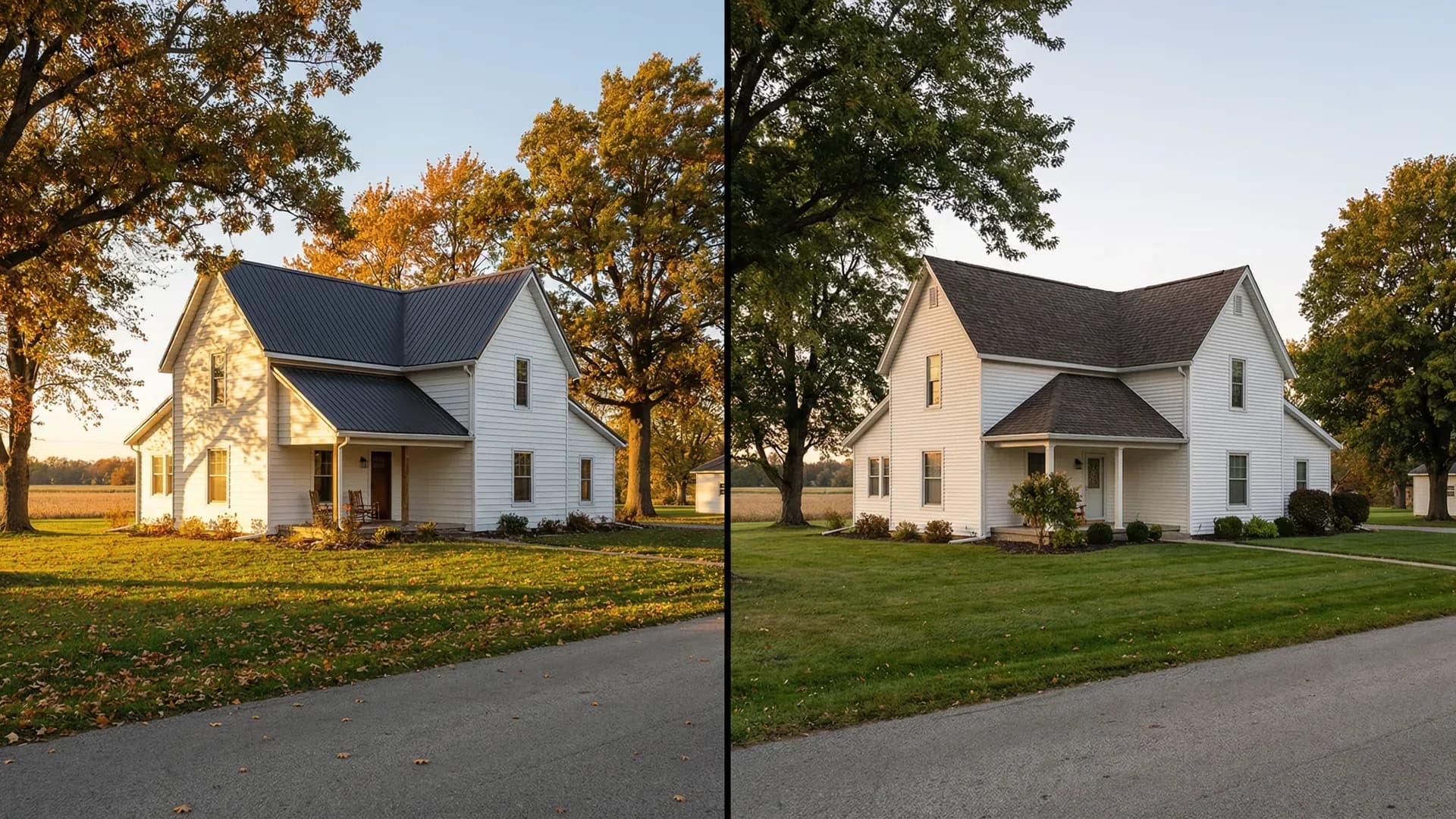
This used to be a clear win for shingles. Not anymore. Modern steel roofing comes in a wide range of colors and profiles that complement everything from century-old farmhouses in DeKalb County to new construction in Goshen. Standing seam panels give a clean, contemporary look. Exposed fastener panels work well on agricultural buildings and outbuildings.
Shingles still offer more variety. Architectural shingles can mimic the look of cedar shakes, slate, or tile. If your neighborhood has a specific aesthetic or your HOA has guidelines, shingles usually offer more options for blending in. That said, we've installed metal roofs in HOA communities without issue - it depends on the specific rules.
Which Is Right for Your Home?
After installing hundreds of both across northeast Indiana, here's our honest take on who should choose what.
Metal Roofing Makes Sense When...
- You plan to stay in your home for 15+ years
- Your roof has a steeper pitch (4/12 or greater) where the panels really shine
- You want minimal long-term maintenance
- Snow load or ice dam prevention is a priority
- You're building new and can factor the cost into your mortgage
- You value energy efficiency and lower utility bills
Shingles Make Sense When...
- Your budget is under $15,000 for the project
- You're planning to sell within the next 5–10 years
- Your HOA restricts roofing material choices
- You want a specific style that metal doesn't offer well
- Your roof has complex geometry with lots of valleys and dormers (shingles are often easier and cheaper to install on complex rooflines)
- You need a fast installation - shingle crews can often complete a job in 1–2 days
Common Myths We Hear
"Metal roofs are loud in the rain"
Not when installed over solid decking with an underlayment - which is how we always do it. A metal roof installed on a residential home with proper sheathing and insulation is no louder than shingles during rain. The noise reputation comes from bare-deck agricultural buildings.
"Metal roofs attract lightning"
Metal roofing does not increase the chance of a lightning strike. Lightning hits the tallest object in an area regardless of material. And if lightning did strike a metal roof, the material is non-combustible - actually making it safer than shingles in that scenario.
"Shingles are outdated technology"
Not true at all. Modern architectural shingles have come a long way from the three-tab shingles of 30 years ago. Today's premium lines offer 130-mph wind ratings, Class 4 impact resistance, and algae-resistant granules. They're a legitimate high-performance roofing material.
Insurance Considerations in Indiana
Your roofing material can affect your homeowner's insurance premiums. Several Indiana insurers offer discounts of 5–15% for Class 4 impact-resistant roofing - which includes both metal and impact-resistant shingle products. Some carriers also factor in roof age: a new roof of either material can reduce your premium compared to an aging one that's past its expected lifespan.
We recommend calling your insurance agent before you finalize your material choice. The premium difference could shift your cost calculation meaningfully.
The Bottom Line
There's no universal winner between metal and shingles. Both protect Indiana homes effectively when properly installed. Metal delivers superior longevity, energy savings, and low maintenance at a higher upfront cost. Shingles provide excellent short-to-medium-term value with more style flexibility and a lower initial investment.
What matters most is choosing the right material for your specific situation and having it installed correctly. Skyline Roofing Systems installs both metal and shingle roofing systems across all seven counties we serve. We'll walk through the pros and cons with you, give you a straight answer about what we'd do on our own house, and deliver a roof that performs for decades. Call us at (260) 205-8448 or request a free estimate online.